Smallest Airport in the World – Where Is It & Why Is It So Small?
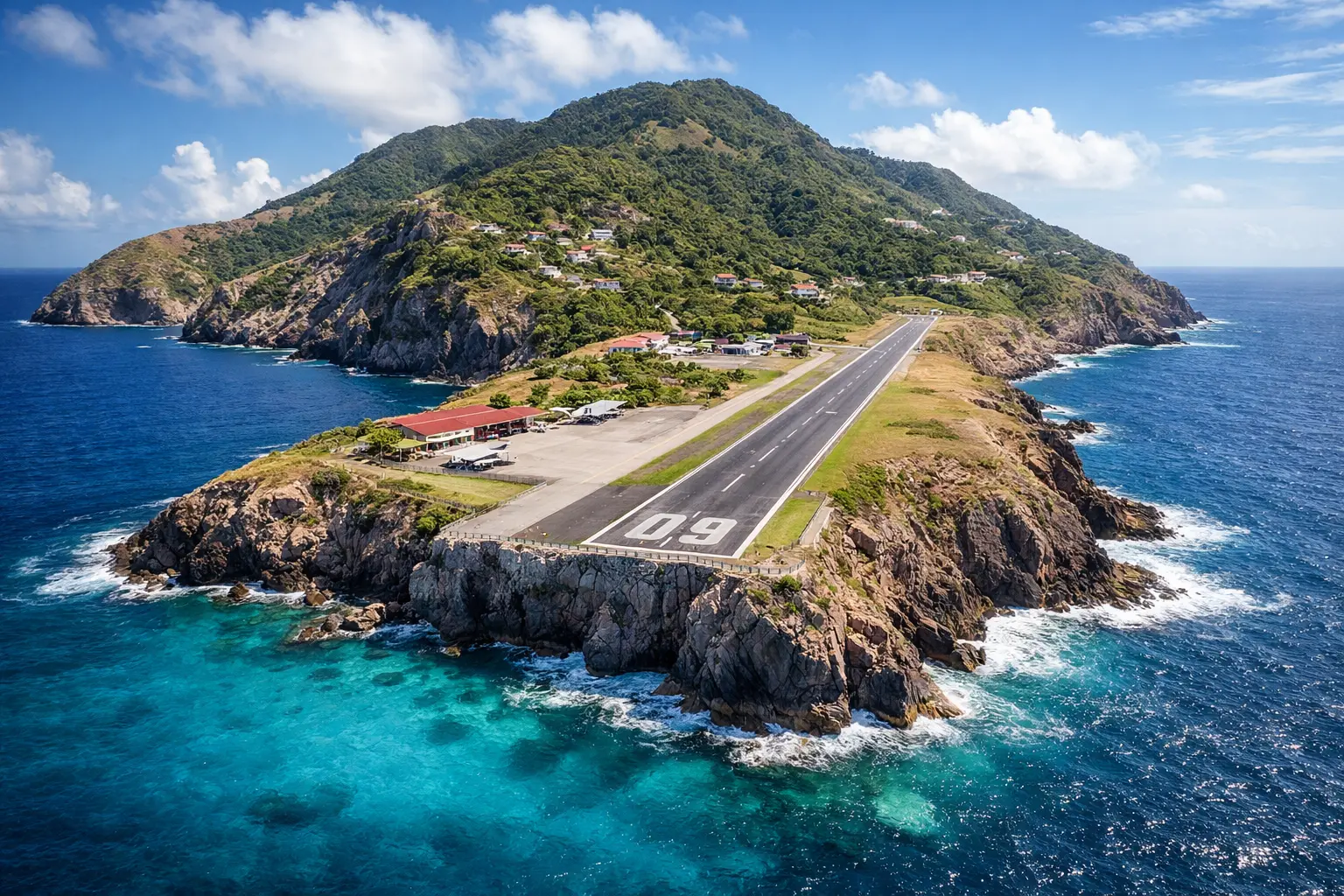
If you have ever wondered how tiny an airfield can be and still welcome scheduled passengers, the smallest airport in the world on the island of Saba provides the most dramatic answer. Perched on a rocky Caribbean peninsula with cliffs dropping straight into the sea, this miniature airfield manages to combine extreme geography, strict safety rules, and a surprisingly smooth travel experience. In this in‑depth guide, you will discover what makes Juancho E. Yrausquin Airport unique, how flights operate safely on such a short strip, and why aviation enthusiasts regard it as a must‑see destination.
What Is the Smallest Airport in the World?
The title of smallest airport in the world generally refers to the one with the shortest commercial runway used by scheduled passenger flights. By that definition, the record goes to Juancho E. Yrausquin Airport (IATA: SAB, ICAO: TNCS) on the tiny island of Saba in the Dutch Caribbean. Its single paved runway measures roughly 396–401 meters in length, making it dramatically shorter than the runways at most regional airfields, let alone major hubs. Despite this, the airport handles regular passenger services and serves as Saba’s lifeline to the wider region.
When people search for the smallest airport, they usually want a clear and immediate answer: the name, the runway length, and where it is located. This is why any strong article on the topic should begin by plainly stating that Saba’s airport holds the record for the shortest commercial runway in the world, while also clarifying that several other airports compete for titles like “most dangerous” or “most unusual” for different reasons.
Where Is Juancho E. Yrausquin Airport and Why Is It Unique?
Juancho E. Yrausquin Airport sits on the northeast side of Saba, a rugged volcanic island in the Lesser Antilles. Rather than spreading over a wide flat plain like most airports, it occupies a narrow, artificially leveled peninsula projecting out into the sea. On three sides, steep cliffs fall directly into the water; on the fourth side, the terrain rises sharply into jagged hills and the island’s central volcanic slopes. This dramatic topography is a big reason why the runway could not be made longer, and why the airfield attracts so much global attention.
Because usable flat land is so limited, the entire airport feels smaller than many airparks and private strips. It consists of a single short runway, a small apron where one or two aircraft can park, a compact terminal building, and basic support facilities. Yet this tiny platform shoulders the responsibility of handling all scheduled air traffic, medical evacuations, and essential cargo for the island’s residents, making it one of the most important pieces of infrastructure in Saba despite its modest footprint.
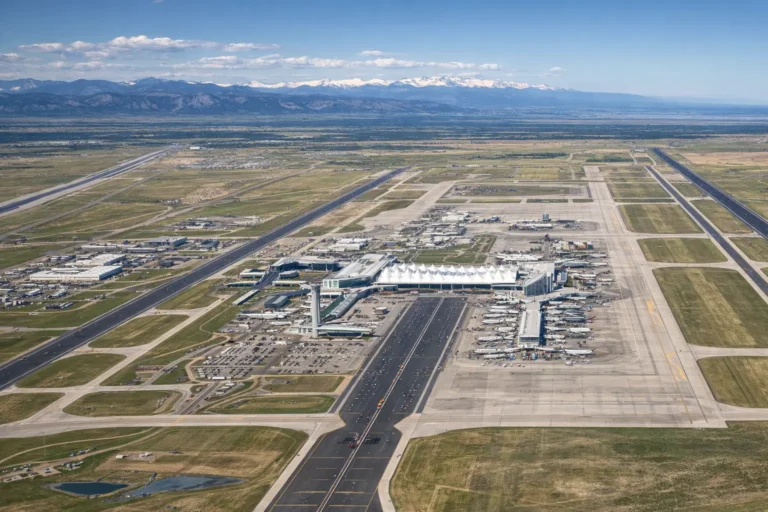
If you’re curious about the opposite extreme, read our detailed guide on Denver International Airport, one of the largest airports in the world known for its massive land area and iconic tent-like terminal design.
Saba Airport Runway Length and Technical Specs
To understand why this airfield is so famous, it helps to look at the technical details of the runway and its environment. While different sources quote slightly different figures, the runway at Juancho E. Yrausquin Airport is widely listed at around 396–401 meters in length and about 18 meters in width. For comparison, many large international runways exceed 3,000 meters, and even the shorter strips at regional airports often measure 1,200 meters or more.
Key technical features include:
- Runway designation: 12/30, reflecting its magnetic heading.
- Surface: Paved asphalt.
- Length: Approximately 400 meters, making it the shortest commercial runway in the world.
- Width: About 18 meters, narrower than many standard commercial strips.
- Location: Elevated on a peninsula with cliffs at or near both ends of the runway.
- Approach: Visual approaches only, with no instrument landing system and limited room for go‑around maneuvers.
Because there is no extended overrun area at either end, pilots must execute highly precise approaches and departures. There is very little margin for error, and controlling speed, descent, and touchdown point is essential. This is why you will never see large jets or even typical short‑haul airliners using this airfield; only small, highly capable aircraft are allowed to land here under strict procedures.
Why Jets Cannot Land and Which Aircraft Do
The combination of short runway, limited overrun, and steep terrain makes the airport unsuitable for conventional jet aircraft. Large commercial jets require high takeoff and landing speeds, which translates into much longer runway lengths than Saba can provide. Even if a jet technically could land under perfect conditions, there would be no safe margin for stopping distance or emergencies.
Instead, operations are restricted to short takeoff and landing (STOL) capable turboprop aircraft. The most iconic type you will see at the airport is the de Havilland Canada DHC‑6 Twin Otter, a rugged twin‑engine turboprop designed for challenging environments and short strips. These aircraft are able to generate significant lift at low speeds, climb quickly, and handle steep approaches and departures. In the hands of specially trained pilots, they make regular service to this tiny runway not only possible but reliably safe.
Flights, Airlines, and How to Get to the Caribbean Island with the Smallest Airport
Reaching Saba is part of the adventure, and understanding the flight options is crucial for travelers. The primary carrier operating scheduled services to Juancho E. Yrausquin Airport is Winair (Windward Islands Airways), a regional airline based in the nearby island of Sint Maarten. Winair’s Twin Otters connect Saba with Princess Juliana International Airport (SXM), which itself receives flights from major gateways in North America, Europe, and elsewhere in the Caribbean.
A typical trip looks like this:
- Fly into SXM on a larger commercial airline.
- Transfer to a Winair Twin Otter flight for the short hop to Saba.
- Spend about 12–15 minutes in the air between Sint Maarten and Saba, flying low enough to enjoy impressive views of the sea and surrounding islands.
Because the aircraft are small and the runway is short, weight and balance considerations matter. Passengers usually have to respect tight baggage limits, and flights sometimes adjust loads based on weather conditions such as strong winds or high temperatures. This operational reality can influence scheduling and pricing, so booking early and remaining flexible is often helpful.
Best Time to Visit Saba and How Weather Affects Flights
Saba has a tropical maritime climate, with warm temperatures year‑round and variations mainly in rainfall and storm risk. For many travelers, the best period to visit runs from December to April, when conditions are generally drier and more stable, making hiking, diving, and sightseeing more comfortable. The summer and early autumn months can bring higher humidity, more frequent rain, and the possibility of tropical storms or hurricanes in the wider region.
Weather is particularly important for an airport with such a short runway and visual approaches only. Poor visibility, low cloud, or high crosswinds can lead to delays or cancellations, because pilots require clear conditions and manageable wind profiles to operate safely. When planning a trip, it is wise to:
- Allow buffer time in your schedule in case a flight must be rescheduled.
- Keep an eye on seasonal storm forecasts.
- Consider travel insurance that covers weather‑related disruptions if you are visiting during the more active months.
How the World’s Smallest Airport Stays Safe
A common assumption is that a tiny airfield perched on cliffs must be extremely dangerous, but safety at Juancho E. Yrausquin Airport is built on layers of strict rules and specialized training. The airport operates under visual flight rules and visual meteorological conditions, meaning pilots must have clear visibility and cannot rely on instrument approaches for landing in poor weather. If visibility or wind conditions fall outside defined limits, flights simply do not operate.
Several key factors contribute to operational safety:
- Aircraft restrictions: Only certain types of small, high‑performance turboprops are permitted to use the runway. These aircraft are certified for operations on short strips and can land and take off within the available distance when properly configured.
- Pilot qualification: Captains flying into Saba normally undergo specific route and airport training, including familiarization with the runway’s characteristics, typical wind patterns, and go‑around procedures. This training is refreshed regularly to maintain proficiency.
- Operational procedures: Approaches are flown with carefully calculated speeds, flap settings, and descent profiles. Pilots use short‑field landing techniques, aiming to touch down near the threshold and apply maximum braking immediately.
- Weather and daylight limitations: Flights are generally scheduled during daylight hours, and marginal weather conditions result in delays or cancellations rather than risky attempts.
Rather than being an uncontrolled hazard, the airfield is a carefully managed environment where aviation authorities, airlines, and pilots apply conservative principles to a challenging location.
Short Runway Landing Techniques
To help readers understand why this works in practice, it is worth briefly explaining short runway landing techniques in accessible language. On approach to Saba, a pilot will:
- Configure the aircraft early, with flaps set for maximum lift and drag suitable for landing.
- Maintain a stabilized descent path at a speed only slightly above the stall speed for the configuration, leaving minimal excess energy.
- Aim to cross the threshold at the correct height and speed, avoiding floating or flaring too high.
- Execute a firm touchdown close to the designated landing zone, then deploy maximum braking and reverse thrust if available.
These techniques reduce the distance required to stop and allow the aircraft to fit safely within the limited runway length.
Traveler Experience: What It Is Like to Land on the World’s Shortest Commercial Runway
For many visitors, the flight into Saba becomes a highlight of their Caribbean journey. The experience combines spectacular scenery with a sense of controlled intensity that you rarely feel on large commercial jets. After boarding a Twin Otter in Sint Maarten, passengers often find themselves seated close to the cockpit, with views of both the instruments and the horizon.
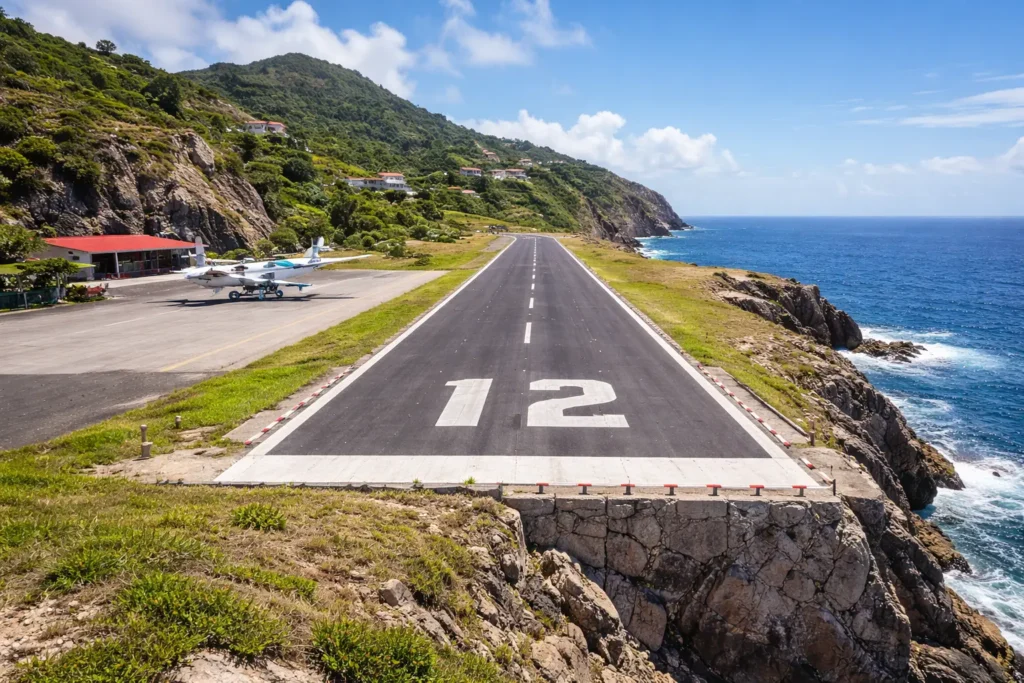
As the aircraft approaches Saba, the island’s steep green slopes and rocky coastline grow rapidly in the windscreen. The pilot positions the aircraft for final approach, and the runway suddenly appears on a narrow tongue of land jutting into the sea. The cliffs on either side emphasize just how little room is available, creating a moment of genuine awe for anyone looking out the window.
Once the wheels touch down, the landing roll is short and purposeful. Within seconds, the pilot has steered the aircraft onto the apron near the tiny terminal. Disembarkation feels more like stepping off a private charter than leaving a typical airline flight; you walk across the tarmac, often with just a handful of fellow passengers, and enter a compact building where formalities are completed quickly.
Many travelers describe the arrival as:
- Intense but reassuring, thanks to the smooth professionalism of the crew.
- Incredibly scenic, offering views of cliffs, waves, and the island’s volcanic peaks.
- Surprisingly efficient, with short queues, quick baggage return, and a relaxed local welcome.
This human‑centered angle connects with searchers who want to know not only technical facts but also how it feels to use the airport.
How Saba Compares to Other Dangerous Small Airports
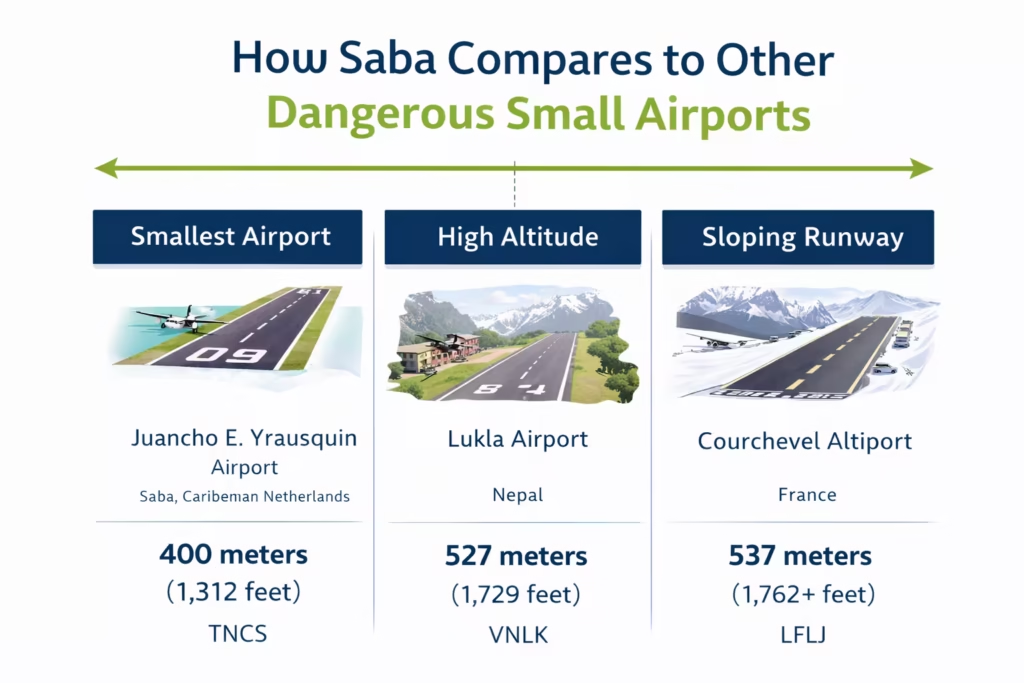
Although Juancho E. Yrausquin Airport holds the record for runway length, it is not the only small or challenging airfield that fascinates travelers. Comparing Saba with other extreme airports helps readers understand the different ways an airport can be “small,” “dangerous,” or “unique.”
Tenzing–Hillary Airport (Lukla, Nepal)
Often called the world’s most dangerous airport, Tenzing–Hillary Airport serves the gateway town for treks to Everest. Its runway is about 527 meters long, significantly longer than Saba’s, but it sits at high altitude with a steep gradient and mountainous terrain on all sides. One end terminates in a cliff, while the other faces a rock wall, leaving almost no room for error during takeoff or landing.
Gustaf III Airport (St. Barts)
In the Caribbean island of Saint Barthélemy, Gustaf III Airport is famous for its dramatic approach. Aircraft must drop steeply over a hill and cross a road right before the runway threshold, then roll out towards a beach at the far end. With a runway of around 646 meters, it is short but longer than Saba’s strip. However, the combination of terrain, traffic, and crowds on the beach gives it a reputation for being both thrilling and demanding.
Barra Airport (Scotland)
Barra Airport, located in Scotland’s Outer Hebrides, is the only airport in the world where scheduled flights land on a tidal sand beach. Its runways are marked by simple posts, and operations are scheduled according to the tide. While its runways are short, Barra’s uniqueness lies more in its surface and tidal conditions than in being the absolute minimum in runway length.
Westray and Papa Westray (Scotland)
The islands of Westray and Papa Westray in Scotland are linked by what is often billed as the world’s shortest scheduled flight, lasting around two minutes. The airports themselves feature relatively short runways, but they are not quite as extreme as Saba in terms of cliffs or approach angles. Their fame comes from the ultra‑short route rather than runway dimensions alone.
Heligoland (Germany)
On the German island of Heligoland, a small airfield situated close to the sea contends with strong winds and limited runway length. Like Saba, it serves as an important link for residents and visitors, and it showcases how engineering and careful procedures can make challenging aerodromes both practical and safe.
Taken together, these examples show that the smallest airport in the world is part of a broader family of dangerous small airports and unusual runways, each with its own mix of constraints and solutions. Saba stands out because it combines the shortest commercial runway with cliff‑edge geography and strong safety practices.
Is the Smallest Airport in the World Also the Smallest International Airport?
While definitions vary slightly between aviation authorities, Juancho E. Yrausquin Airport is often described as the smallest international airport because it processes cross‑border passengers traveling between Saba and neighboring territories. The terminal may be tiny, but it still handles essential border formalities such as passport control and customs checks for regional travelers.
This means that Saba’s airport is not just a local strip; it is an international gateway in miniature. For searchers, this answers an important nuance: the smallest airfield used by scheduled commercial flights is also one of the smallest fully functional international airports anywhere, emphasizing just how remarkable the facility is.
FAQs About the Smallest Airport in the World
1. Where exactly is the smallest airport in the world?
The airport commonly recognized as the smallest airport in the world is Juancho E. Yrausquin Airport, located on the island of Saba in the Dutch Caribbean. Saba lies in the northeastern Caribbean, south of Sint Maarten and west of St. Barts.
2. How long is the runway at Saba’s airport?
The runway at Saba’s airport is approximately 396–401 meters long, making it the shortest commercial runway in regular passenger service. This extremely limited length is one of the key reasons why only small, specialized turboprop aircraft can operate there safely.
3. Is it safe to fly into Saba?
Yes, flights into Saba are considered safe because operations are tightly controlled. Only specific aircraft types and highly trained pilots are allowed to use the runway, flights run under visual conditions with defined weather minima, and schedules are adjusted whenever visibility or wind conditions fall outside strict limits.
4. Which airline flies to the smallest airport in the world?
The main airline serving the airport is Winair (Windward Islands Airways), which operates short Twin Otter flights between Saba and Princess Juliana International Airport (SXM) on Sint Maarten. From SXM, travelers can connect to numerous international routes.
5. Can large jets land at the smallest airport in the world?
No, large jets cannot land at Saba’s airport. The runway is far too short, and the surrounding terrain leaves no safe margin for takeoff and landing distances required by jet aircraft. Only small STOL‑capable turboprops, such as the DHC‑6 Twin Otter, are permitted to operate.
6. What is it like to land on the world’s shortest commercial runway?
Landing at Saba is a memorable experience. Passengers enjoy panoramic views of the sea and cliffs as the aircraft lines up with the narrow peninsula. The touchdown and rollout are short and controlled, and the walk from the aircraft to the tiny terminal takes only moments, giving the arrival a very personal feel.
7. When is the best time of year to visit Saba?
The best time to visit is typically from December to April, when the weather is drier and more stable. During this period, conditions are often ideal for hiking, diving, and flying. The late summer and early autumn months can bring higher rainfall and a greater risk of storms, which sometimes affects flight schedules.