The Ultimate Guide to the Safest Parking Position in Denver: How to Protect Your Vehicle
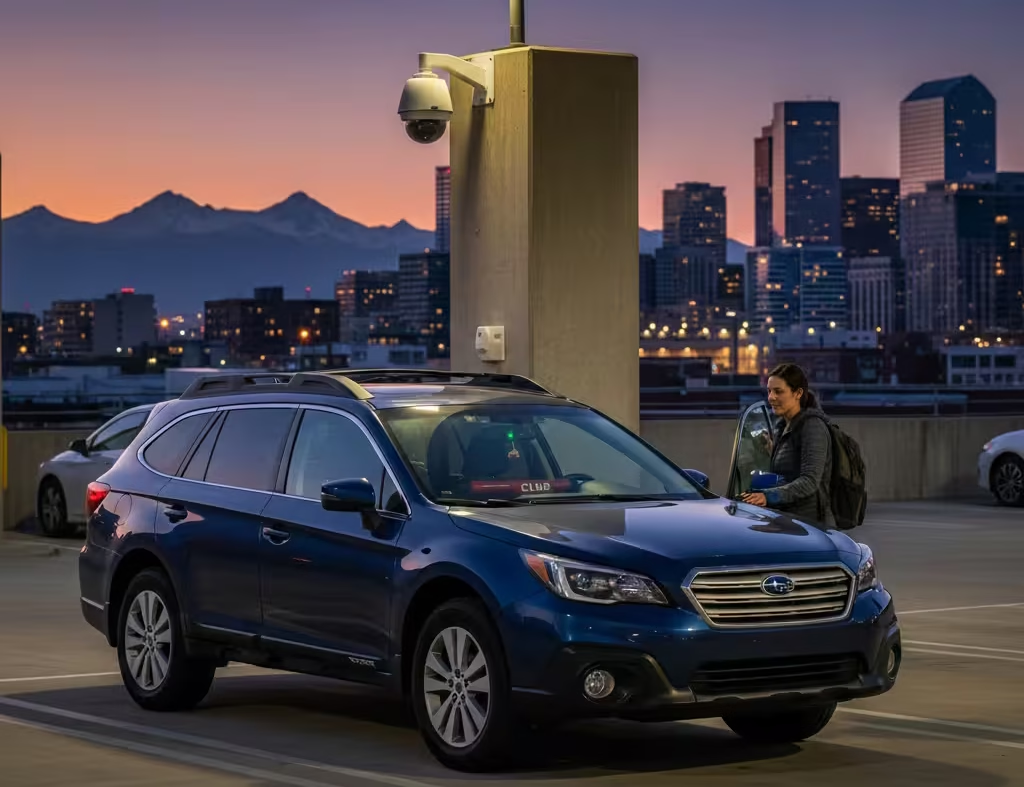
Finding a parking spot in a bustling city like Denver, Colorado, can be a challenge. But the task doesn’t end when you pull into an open space. Your vehicle’s orientation—where you park, and how you park—plays a critical role in its security and your personal safety.
In a metropolitan area where vehicle property crime is a persistent concern, choosing the safest parking position is not just about convenience; it is a vital defensive strategy. This comprehensive guide, tailored for the Denver-based driver, will break down the science of safe parking, provide actionable tips for different environments, and help you dramatically reduce your risk of becoming a victim of an incident or accidental damage.
Understanding the Fundamentals: Is Forward or Reverse the Safest Parking Position?
When it comes to bay parking (perpendicular or angled spots in lots and garages), there is a universally accepted gold standard for safety: Reverse Parking (Back-In Parking).
While it may take a few extra moments to maneuver into a spot by reversing, the trade-off in safety and convenience upon exiting is well worth it.
The Superiority of Reverse Parking
The primary advantage of backing into a parking space is maximizing your visibility when it’s time to leave.
When Head-In (Forward) Parking Might Be Necessary
While generally less safe, forward parking (nose-in) is sometimes unavoidable or even preferable:
Safest Parking Position Strategies for Different Denver Environments
The ideal parking strategy changes based on the environment. Protecting your car in a downtown Denver parking garage requires different tactics than parking on a snowy street in Capitol Hill or at the vast expanse of Denver International Airport (DIA).
1. Parking Garages and Commercial Lots (Downtown & Malls)
These are high-risk areas for both accidental damage (door dings, scrapes) and opportunistic incidents. Your choice of spot is everything.
2. Street Parking in Residential Areas (e.g., Highlands, Capitol Hill)
Street parking requires vigilance against both incidents and compliance with Denver’s specific parking ordinances.
- The Rule of Light: Always park directly under or as close as possible to a working streetlamp. A brightly lit vehicle is a much less appealing target.
- Mind the Curbs: In Denver, vehicles must be parked within 18 inches of the curb (Source 1.2). When parking on a hill, remember the “Up, Up, and Away” rule:
- Uphill with a Curb: Wheels should be turned away from the curb.
- Downhill with a Curb: Wheels should be turned toward the curb.
- On a Hill without a Curb: Turn wheels toward the side of the road (right) so the car would roll away from the center of the street.
- Check Local Signs: Denver has complex permit zones, street sweeping schedules, and varying time limits. An illegally parked car is a vulnerable car, as it is more likely to be towed or damaged.
Advanced Protection Strategies for the Denver Driver
Denver’s unfortunate rate of vehicle incidents demands more than just smart parking; it requires a multi-layered security approach. According to DPD data, certain models, particularly older ones, are frequently targeted for unauthorized use.
1. The Visible Deterrent
A visible security device signals to an individual that your car is not an easy target, causing them to move on to a less protected vehicle.
- Steering Wheel Locks (The Club): These brightly colored, physical locks are a visual deterrent that adds a significant delay for any unauthorized person, making them highly effective. Many local authorities in Denver have offered free distribution programs for these.
- Kill Switch or Immobilizer: A hidden, manual switch that interrupts the fuel pump or ignition system can prevent the car from starting, even if someone manages to bypass the traditional ignition. This is a common defense against the unauthorized use of older, key-start vehicles.
2. Removing the Temptation
A significant portion of vehicle-related crime is property loss from a vehicle, often fueled by an incident of opportunity.
- Conceal Everything: Never leave anything visible on your seats, dashboard, or floor. This includes loose change, charging cables, gym bags, clothes, and empty grocery bags—all of which could signal a hidden valuable.
- Trunk Before You Arrive: If you need to put a laptop bag or shopping in the trunk, do it before you arrive at your destination. An individual watching a lot will see you placing valuables in the trunk and mark your car as a target.
- Remove Personal Documents: Do not keep your vehicle title, insurance card, or any document with your personal address/details in the glove compartment. If stolen, this information can be used for identity misuse.
3. Leveraging Technology
Modern security technology offers powerful tools for prevention and recovery.
- Dashcams with Parking Mode: Invest in a dashcam that is hardwired for 24/7 “parking mode.” This allows the camera to record if it detects motion or impact while the car is off. Reverse parking maximizes the dashcam’s view of the activity lane.
- GPS Tracking Devices: Installing a discreet GPS tracking device provides law enforcement with real-time location data, drastically increasing the chances of recovery. Denver’s own “DenverTrack” program is an excellent example of this partnership in action, allowing owners to preauthorize police access to vehicle GPS data in the event of unauthorized removal (Source 5.4).
- Key Fob Security: Modern keyless entry fobs are vulnerable to “relay attacks” where individuals use signal amplifiers to trick your car into unlocking. Store your key fob in a Faraday bag (a signal-blocking pouch) inside your home to prevent this sophisticated method.
The Safe Parking Checklist: A Step-by-Step Summary
Before you walk away from your car, a quick 30-second audit can be the difference between peace of mind and an incident.
|
Step |
Action |
Why It’s Important |
|---|---|---|
|
1. Choose Your Spot |
Select a space that is well-lit, visible to CCTV, and close to pedestrian traffic. |
Maximizes visibility and security surveillance, discouraging unauthorized activity. |
|
2. Park The Safest Way |
Reverse into the spot (unless parallel parking or on a steep downhill curb). |
Ensures forward visibility for a quick, safe exit. |
|
3. Secure the Interior |
Remove all personal items from plain sight (bags, electronics, coins) and place them in the trunk before parking. |
Eliminates opportunities for property loss. |
|
4. Check the Exterior |
Fold in your side mirrors (especially in tight street/garage spots) and ensure you are parked centrally within the lines. |
Prevents accidental damage from passing cars or opening doors. |
|
5. Activate Security |
Double-check the locks (listen for the click) and engage any supplemental anti-vandalism device (steering wheel lock, kill switch). |
Confirms the vehicle is secured against entry. |
|
6. Note Your Location |
Snap a picture of your parking level/row number or drop a pin on your phone’s map. |
Saves time and stress upon return, especially in large facilities. |
Parking Position and Denver’s Climate: A Special Consideration

The safest parking position in Denver must account for its intense, unpredictable weather, particularly snow and hail.
Conclusion: Prioritizing Your Safest Parking Position
The safest parking position is not a single location but a calculated strategy that combines reverse parking with situational awareness and multi-layered protection measures. For Denver drivers facing the realities of urban congestion and vehicle incidents, mastering these techniques is non-negotiable.
By prioritizing highly visible locations, always backing into a spot for a safer exit, removing visible personal items, and using physical and technological protection devices, you actively reduce the vulnerability of your vehicle. A proactive, defensive parking strategy will ensure you drive away safely and with peace of mind every time.