
Denver City Explained: History, Neighborhoods, Cost of Living, and Lifestyle
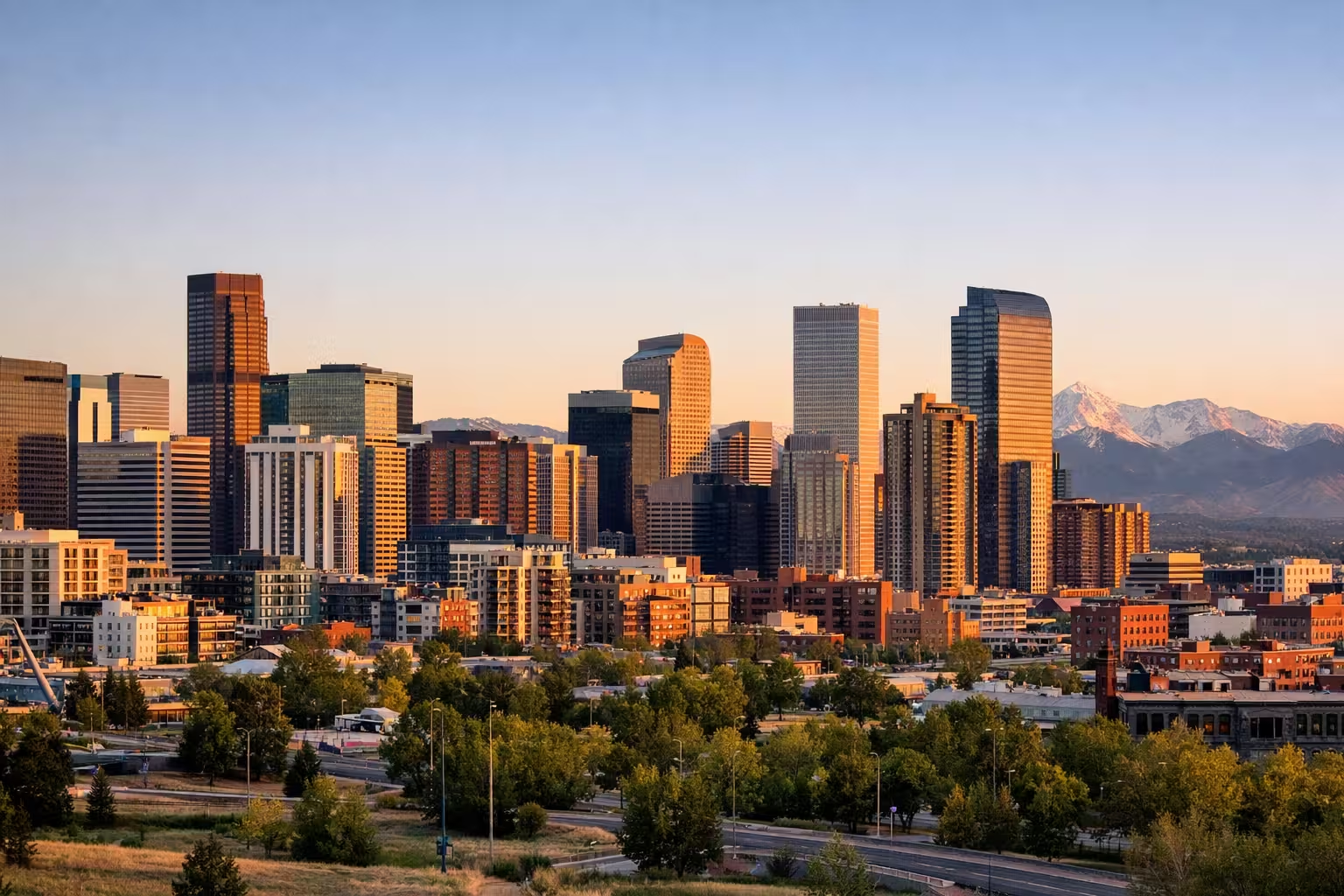
If you search for Denver City, you can run into two different places. One is Denver, Texas. The other is the city most people actually mean, Denver, Colorado, which began as Denver City during the gold rush era. That confusion matters, because a weak article ignores it and loses trust right away. A strong article clears it up in the first minute and then gets to the point.
This guide focuses on Denver, Colorado, which matches the broader U.S. search intent behind the term. It explains what makes the city important, what daily life feels like, how its neighborhoods differ, what its economy looks like, and why people keep moving there despite higher housing costs and fast change.
What Denver City actually refers to
The term Denver City matters because it is both historical and current. Historically, Denver was founded as Denver City in 1858. Over time, the name was shortened, but the earlier version still appears in records, local history, and some search results. That is why the phrase still triggers results about the capital of Colorado even when the modern city is simply called Denver.
At the same time, Denver City is also the official name of a small town in West Texas.
Where Denver City sits and why the location matters
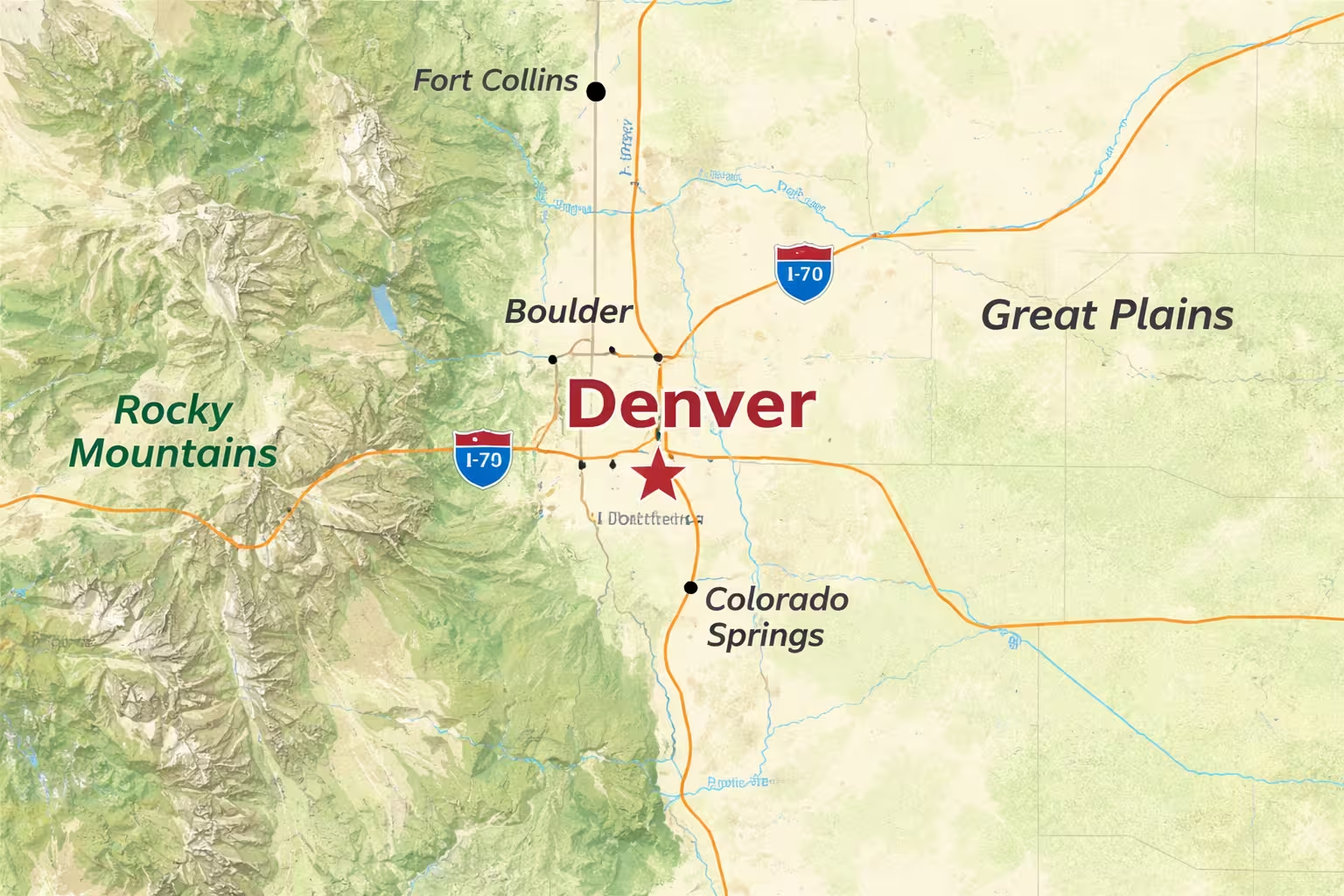
Denver City, in the Colorado sense, sits where the Great Plains meet the Front Range of the Rocky Mountains. That location shapes almost everything about the city. It explains the dry air, the huge skies, the fast weather shifts, and the way Denver feels both urban and outdoorsy at the same time. You get a real city grid, office towers, rail lines, universities, museums, and pro sports. Then, not far away, you get foothills, ski routes, trailheads, and mountain parks.
That geography also made Denver a natural hub. It became a financial, transportation, and distribution center for a large part of the Rocky Mountain region. It still plays that role today. Businesses like the city because it connects western states, plains markets, and national travel routes. Residents like it because they can live in a major city without losing access to open space. That balance is one of the strongest reasons Denver keeps drawing attention.
From gold camp to capital city
The origin story of Denver City is not polished. It began as a rough settlement tied to the gold rush of 1858. Prospectors and speculators pushed into the area around Cherry Creek and the South Platte River, hoping to cash in on mineral discoveries. The first version of the place was not guaranteed to survive. Like many boom settlements, it could have burned out fast. Instead, it gained momentum through trade, location, and political advantage.
That advantage turned into permanence. Denver was officially formed in 1861, then kept growing as a commercial and rail center. The city later consolidated into the City and County of Denver in 1902, which still shapes how it works today. That history matters because Denver is not just another western city with mountain views. It grew from a speculative camp into a regional capital. You can still see that shift in its layout, civic buildings, older neighborhoods, and the mix of frontier mythology with modern money.
Is Denver a city or a county
This is one of the most important questions people ask, and many articles answer it badly. Denver is both a city and a county. The official structure is the City and County of Denver, which means one consolidated local government performs both municipal and county functions. That is not how most U.S. cities work, so people get confused.
The setup affects everything from governance to identity. Denver has a strong mayor system and a 13-member city council. For an average resident or visitor, the key point is simple. When people say Denver, they usually mean both the city itself and the county government area together. That also explains why population, government, land area, and service data are often reported under the same name.
Population, diversity, and growth in Denver City
Modern Denver City is no small western outpost. The city proper now has a population around 730,000, while the larger metro area sits above 3 million people. That makes Denver large enough to function like a major national city, but still compact enough that neighborhoods feel distinct and the downtown core stays understandable. It is not New York, Chicago, or Los Angeles. That is part of the appeal. People get urban access without the same scale of overload.
The city’s population profile also matters. Denver is diverse, educated, and relatively mobile. The city has a sizable Hispanic or Latino population, a meaningful foreign-born share, and a high proportion of adults with bachelor’s degrees or higher. Those numbers help explain the labor market, restaurant scene, language mix, and political culture. They also explain why Denver often feels younger, more transitional, and more career-focused than smaller western cities. People move there for work, lifestyle, schooling, and access to the broader Front Range economy.
Growth has not been perfectly smooth. Denver has had periods of expansion, slowdown, and rebound. Housing pressure, migration swings, remote work, and affordability stress have all changed the pace. Still, the longer pattern is clear. Denver keeps pulling people in because it offers a mix that is hard to match. It has strong job sectors, national airport access, visible outdoor culture, and enough urban density to support real arts, food, and event life.
What the Denver City economy looks like now
The economy of Denver City is broader than lazy summaries suggest. Yes, energy still matters to the region. Yes, outdoor branding is part of the city’s image. But Denver is not just oil, hiking, and craft beer. Its economy runs through professional services, health care, education, transportation, warehousing, retail, finance, and a growing cluster of technology and innovation work across the metro area. That spread is one reason the city has held regional importance for so long.
Income levels in Denver are strong by national standards, but that does not mean daily life is cheap. Median household income sits in the mid-$90,000s, which sounds solid until you match it against home prices, rent, insurance, child care, and general metro inflation. That tension is central to understanding Denver. It is a city with earning power and real opportunity, but also with higher barriers to entry than many newcomers expect. A polished salary figure alone does not tell the truth.
The job market also reflects Denver’s education base and regional influence. The city has a highly educated workforce, a strong labor force participation rate, and a role as a gateway for the wider Rocky Mountain West. That matters for firms choosing offices, for students deciding where to settle, and for workers comparing Denver with other fast-growing interior metros. The city’s economic story is not hype. It is built on location, connectivity, and a diversified urban base.
The neighborhoods that define Denver City
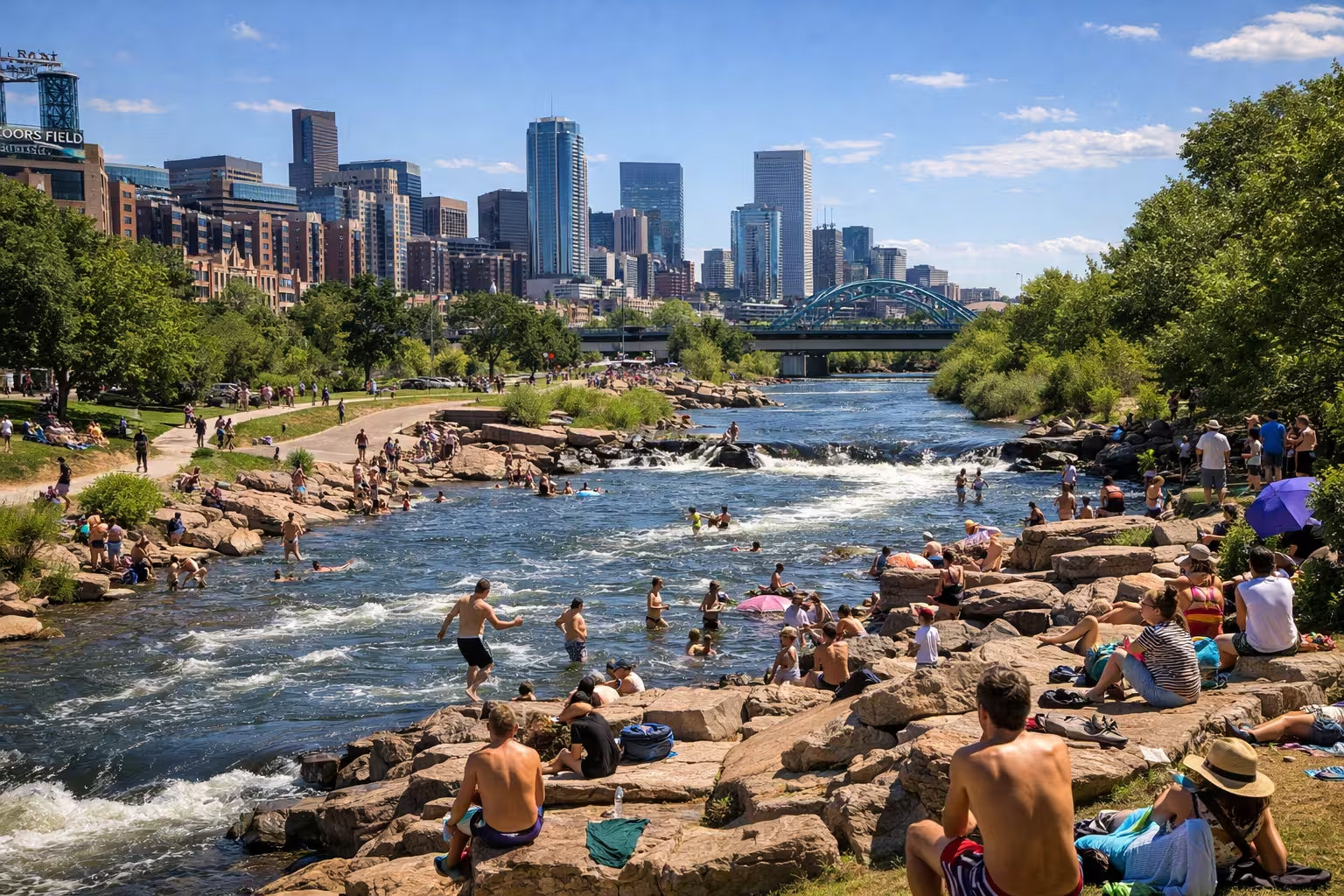
A city becomes understandable when you break it into neighborhoods. Denver City has 78 official neighborhoods, and that is one of the best ways to read the place. Denver is not a one-note city. The experience changes fast from block to block. Some areas feel historic and walkable. Others feel wealthier, quieter, or more suburban. Some lean creative and nightlife-heavy. Others are built around parks, schools, or family routines.
That neighborhood diversity is one reason Denver works for very different people. A visitor can stay downtown and think the city is all lofts, breweries, and game nights. A family in south Denver will tell you a different story. A longtime resident in Five Points or Westwood will tell you another. Understanding Denver means understanding its neighborhood structure, not just its skyline.
Downtown, LoDo, and Union Station
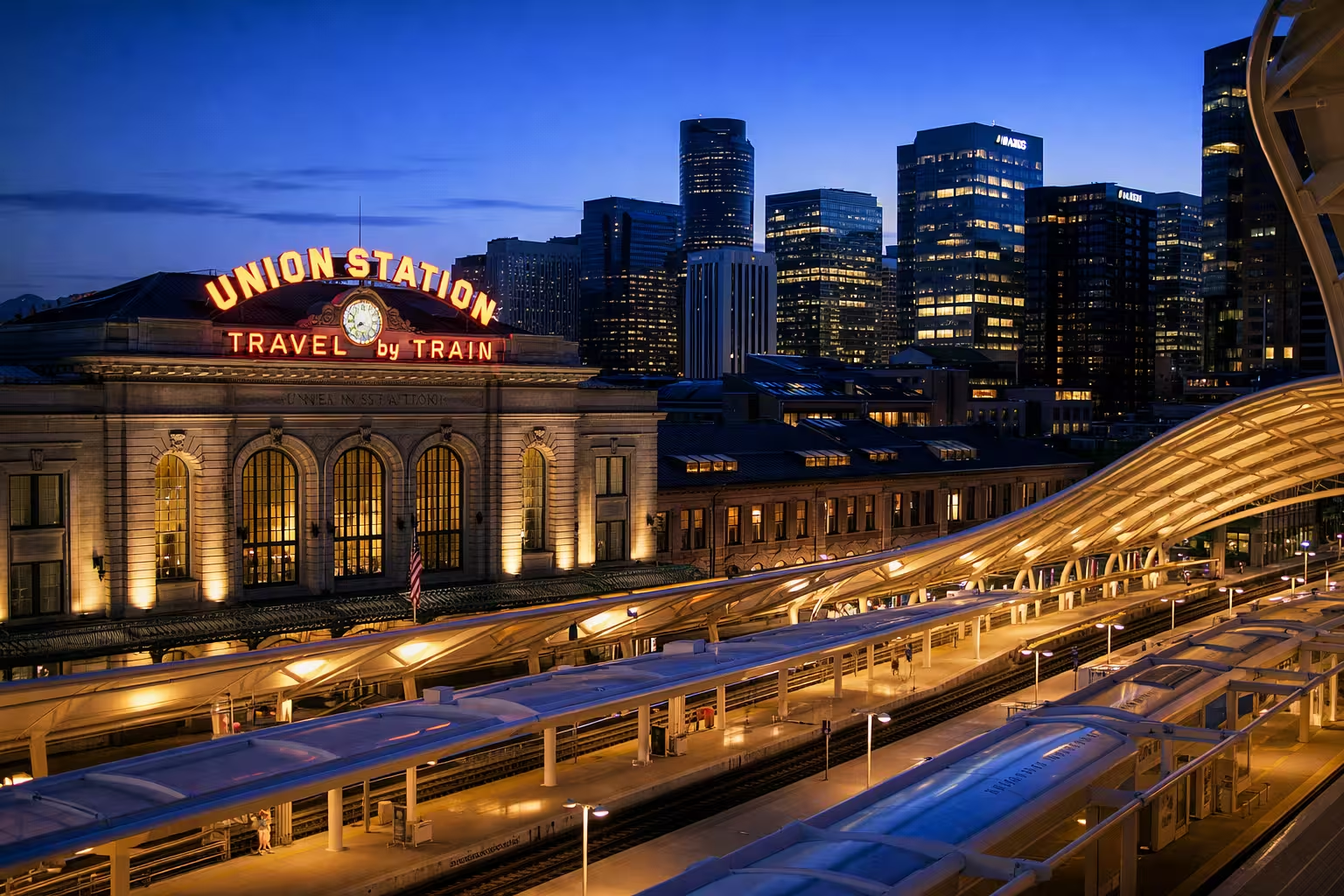
If you want the fast version of Denver City, start here. Downtown Denver and LoDo, or Lower Downtown, give you the highest concentration of hotels, office towers, historic brick buildings, bars, transit access, and major landmarks. Union Station is the anchor. It is both a transportation hub and a social center, which says a lot about modern Denver. The old rail identity never vanished. It was repackaged.
This part of the city works best for visitors, young professionals, and people who want easy access to ballgames, concerts, and nightlife. It also shows the city’s contradictions. It can feel polished and lively on one block, then strained or uneven on the next.
Capitol Hill, Golden Triangle, and City Park
These areas show Denver’s more civic and cultural side. Capitol Hill mixes older apartment stock, historic homes, bars, dense residential streets, and a strong local character. The Golden Triangle brings museums, creative spaces, and access to major institutions. City Park gives you one of the city’s most recognizable green spaces, plus major attractions nearby. This is where Denver starts to feel less like a boomtown success story and more like a mature capital city with layers.
For many people, these neighborhoods hit the sweet spot. They are close to the center without feeling as office-heavy as downtown. They offer history, walkability, and public space. They also show how Denver uses parks and culture to soften urban density. If you want museums, civic landmarks, older architecture, and a more lived-in pace, this cluster deserves serious attention.
RiNo, Five Points, and Highland
This is the side of Denver City that gets photographed the most. RiNo, or River North, is known for murals, adaptive reuse, restaurants, breweries, and creative energy. Five Points carries deep historical weight, especially in Black cultural history and music. Highland blends residential charm with restaurants, views, and strong local identity. These areas matter because they reflect the city’s new image while still carrying older social and cultural roots.
They also show the harder side of Denver’s success. Popularity drives investment, but investment drives cost. Cost changes who can stay. That tension is everywhere in fast-growing neighborhoods. They are also examples of how Denver’s growth has reshaped local culture, street life, housing patterns, and small-business geography.
Cherry Creek, Washington Park, and South Denver
These areas help explain the higher-end and more residential face of the city. Cherry Creek is known for shopping, dining, hotels, and a more upscale tone. Washington Park is built around one of the city’s most loved green spaces and attracts residents who want outdoor access without leaving the urban core. Broader south Denver includes quieter residential blocks, schools, and daily-life infrastructure that does not show up in tourist guides but matters a lot for long-term living.
If you are thinking about quality of life rather than short visits, these neighborhoods often rise fast in the conversation. They offer a different rhythm. Less spectacle. More routine. More errands, runs, dog walks, and school pickup than bar crawls and event calendars. That is useful context, because the best version of Denver for a resident is not always the same version that sells well in travel content.
Cost of living and housing in Denver City
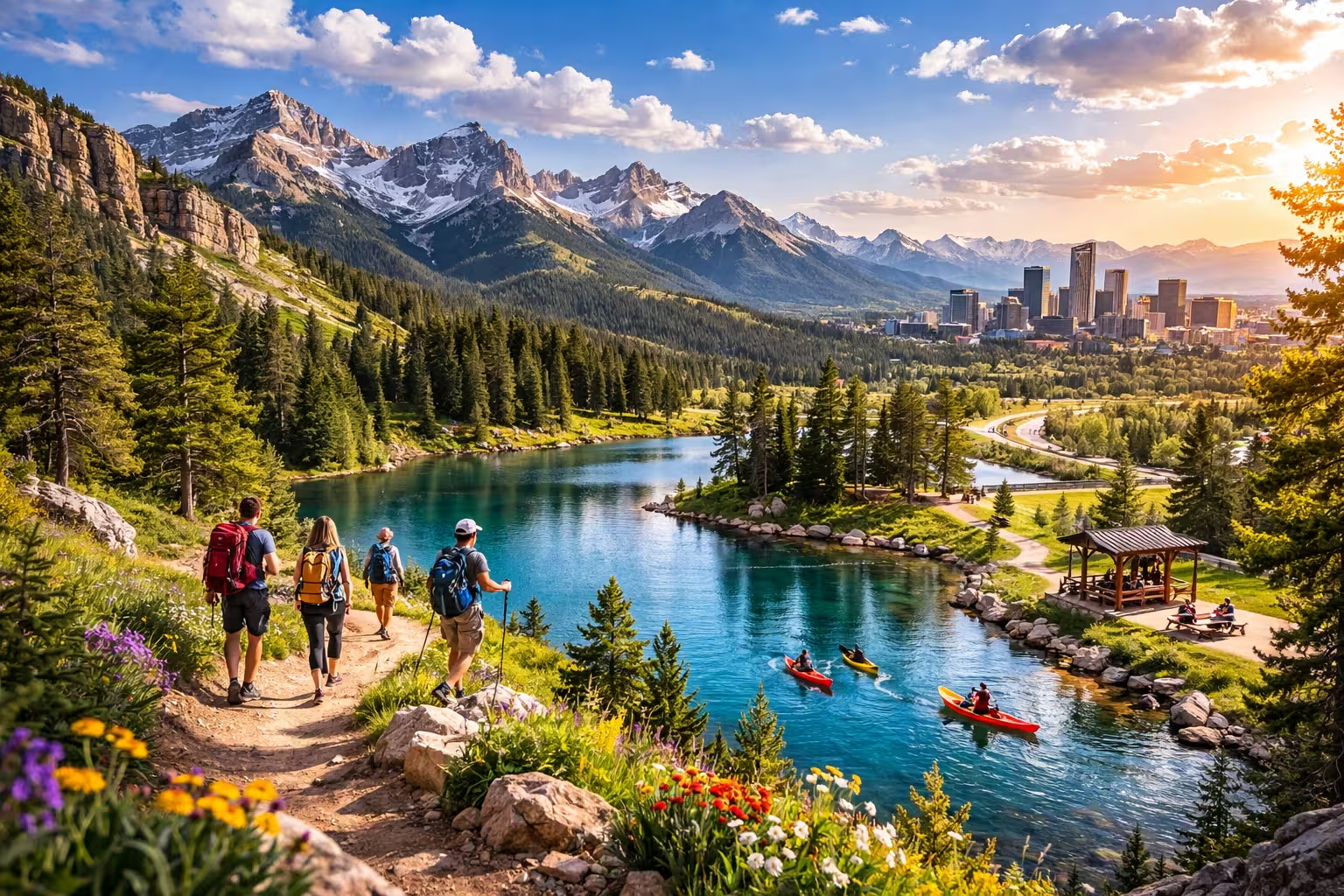
This is where fantasy gets punished. Denver City is attractive, but it is not cheap. Home values are typically in the low-to-mid $600,000s as a citywide median range, and median gross rent is roughly around $1,800. Those are not casual numbers. They shape who can buy, who keeps renting, who lives near the core, and who gets pushed farther out into the metro area.
The housing reality is more complicated than simple sticker shock. Denver offers strong incomes, but not everyone shares that upside. Professionals in higher-paying sectors may find the city manageable. Service workers, early-career residents, and single-income households often feel the squeeze much faster. The result is a city where demand stays high, but affordability anxiety never really leaves the room. That is true whether you are moving in, upgrading, or trying to stay put.
Neighborhood choice changes the math, but it does not erase the pattern. Central, walkable, and high-demand areas cost more. Trade space, age of housing, and commute convenience against price, and the city starts to make more sense. Denver is not the most expensive city in America. It is still expensive enough that people who arrive unprepared get hit hard by the total cost, not just rent or mortgage alone.
Top 5 Neighborhoods to Live in Denver City
|
Neighborhood |
Average Rent (1 Bedroom) |
Average Home Price |
Key Features |
Nearby Attractions |
|---|---|---|---|---|
|
LoDo (Lower Downtown) |
$2,200 |
$600,000 |
Historic district, nightlife, restaurants |
Union Station, Coors Field |
|
Capitol Hill |
$1,750 |
$550,000 |
Cultural landmarks, diverse, tree-lined streets |
Denver Art Museum, Civic Center Park |
|
Washington Park |
$2,400 |
$750,000 |
Parks, lake views, family-friendly |
Washington Park, South Broadway |
|
Five Points |
$1,800 |
$450,000 |
Historic, artistic vibe, gentrifying |
Jazz, Denver Coliseum |
|
Cherry Creek |
$2,600 |
$900,000 |
Upscale, shopping, outdoor activities |
Cherry Creek State Park |
Weather, altitude, and what life actually feels like
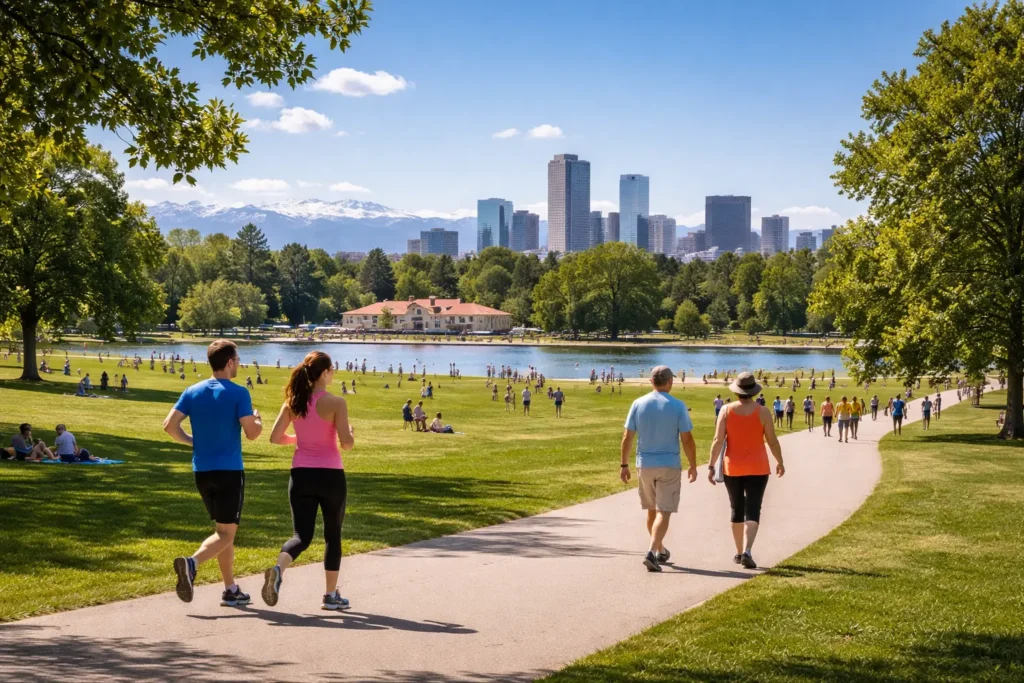
A lot of people hear Mile High City and think they understand Denver. They do not. Denver City sits at one mile above sea level, and altitude does affect how the city feels, especially for new visitors. The air is dry. Hydration matters. Sun exposure hits harder than people expect. A casual walk on your first day can feel more tiring than it should. That does not mean Denver is difficult. It means your body notices the difference.
Denver Weather Comparison Throughout the Year
|
Month |
Average High |
Average Low |
Precipitation (inches) |
Snowfall (inches) |
|---|---|---|---|---|
|
January |
45°F |
19°F |
0.4 |
9.5 |
|
February |
47°F |
21°F |
0.3 |
7.8 |
|
March |
55°F |
28°F |
0.5 |
10.2 |
|
April |
62°F |
35°F |
0.8 |
4.4 |
|
May |
71°F |
46°F |
0.7 |
0.2 |
|
June |
81°F |
56°F |
0.4 |
0.0 |
|
July |
89°F |
62°F |
0.6 |
0.0 |
|
August |
86°F |
60°F |
0.6 |
0.0 |
|
September |
75°F |
50°F |
0.5 |
0.0 |
|
October |
60°F |
36°F |
0.6 |
3.5 |
|
November |
51°F |
27°F |
0.4 |
5.2 |
|
December |
45°F |
19°F |
0.5 |
8.0 |
The weather is another place where outsiders simplify too much. Denver gets around 300 days of sunshine a year, which is real and part of the city’s identity. But sunshine does not mean sameness. Snow can come quickly. Warm afternoons can follow cold mornings. The dry climate changes how people experience heat and winter. Recent climate data also shows the city running warmer than historical norms, which is worth knowing if you are thinking long term.
This combination is part of Denver’s appeal. You get bright winters, a lot of blue sky, and a climate that often makes outdoor plans possible year-round. But you also need realism. The city gets hail, sudden weather turns, and real winter events. The smart way to describe Denver weather is not easy or harsh. It is variable, dry, and more physically noticeable than people assume.
Getting around Denver City

Transportation is one of Denver’s underrated strengths, especially compared with other spread-out western metros. Denver City is not perfect for car-free living everywhere, but it is better connected than a lot of people think. Union Station anchors the system, and the A Line links downtown to Denver International Airport in about 37 minutes across a 23-mile route. That matters more than it sounds. Fast airport access changes how a city functions for business travelers, residents, and visitors.
Transportation in Denver City
|
Mode of Transport |
Cost (One-Way) |
Main Routes |
Notes |
|---|---|---|---|
|
Light Rail |
$3.00 |
A Line, B Line, C Line, D Line |
Connects downtown to suburbs |
|
Bus |
$3.00 |
Multiple routes across the city |
Extensive coverage of Denver |
|
Taxi/Ride-share |
$2.50 + per mile |
Downtown and Metro Denver |
Common service for short trips |
|
Biking |
Free |
Denver B-Cycle stations |
Available year-round, eco-friendly |
|
$30/day |
Denver International Airport (DEN) |
Many rental locations near downtown |
The airport itself is a huge piece of Denver’s role. DEN is one of the busiest airports in the world, handling more than 82 million passengers in 2025 and serving 231 nonstop destinations. That level of connectivity gives Denver national reach that many inland cities would love to have. It supports jobs, tourism, conventions, business expansion, and easier personal travel. It also reinforces Denver’s position as a regional gateway, not just a state capital.
Inside the city, getting around depends on where you live. Downtown and close-in neighborhoods are easier to navigate on foot, bike, or transit. Outer parts of the city still lean harder on cars. So the honest answer is this. Denver is not a transit paradise, but it is not a car prison either. In the right neighborhood, daily movement is manageable. In the wrong one, you will feel the sprawl.
What Denver City is known for
Ask ten people what Denver City is known for and you will get ten different answers. Some will say mountains, even though the major mountain terrain is outside the city proper. Some will say sports. Some will say breweries, weed policy, or skiing access. All of those answers contain some truth, but none of them is enough. Denver’s real identity comes from the overlap between capital city, regional business hub, and outdoor gateway.
Culture is a major part of that picture. Denver has a strong arts scene, multiple museum anchors, creative districts, live music, and a serious performing arts presence. It also has major sports identity through teams like the Broncos, Nuggets, Avalanche, Rockies, and Rapids. Add in neighborhood dining, public art, local festivals, and parks, and the city feels fuller than its stereotype. It is not just a place people pass through on the way to the mountains.
Food is another area where Denver has gained ground. The dining scene has grown up fast, and recent Michelin recognition pushed that reputation further. But the more useful point is not awards. It is range. Denver now offers stronger variety across neighborhoods, from polished restaurants to excellent casual spots tied to Latino, Asian, and broader immigrant communities. That diversity makes the city feel more mature and less one-dimensional.
Best things to do in and around Denver City
If you want the short list that actually reflects the city well, start here.
- Walk LoDo and Union Station to understand Denver’s older core and transit spine.
- Spend time in City Park, then visit nearby cultural anchors like the Denver Museum of Nature and Science or the zoo area.
- Explore RiNo for murals, restaurants, and a more industrial-creative side of the city.
- Visit the Denver Art Museum, Clyfford Still Museum, or Meow Wolf Denver if you want a better read on the city’s arts identity.
- Catch a game at Coors Field or another major venue if you want to feel local energy fast.
- Walk or jog Washington Park if you want to see how residents actually use outdoor space.
- Head west for Red Rocks, but be accurate about it. It is near Denver, not inside the city itself.
Is Denver City a good place to live
The honest answer is yes for many people, but not for everyone. Denver City offers strong lifestyle value if you care about climate, mobility, airport access, parks, sports, and a balanced urban feel. It is especially attractive if you want a major metro that still feels smaller and easier to read than the biggest U.S. cities. The city has real energy, a strong regional role, and enough neighborhood variety to support different lifestyles.
But there is no point lying about the downsides. Housing costs are high. Growth has changed neighborhood character. Some areas feel more polished than rooted. Public concerns around affordability, inequality, street conditions, and city management are part of the real picture. If you want a cheap western city, Denver is the wrong answer. If you want a city with strong access, good weather, and real economic pull, Denver makes more sense.
A fair way to judge it is with a blunt pros-and-cons view.
- Strong points include airport access, sunshine, parks, major sports, jobs, and nearby outdoor access.
- Weak points include housing costs, gentrification pressure, and the fact that some people romanticize the city before they understand the price of living there.
That is the truth. Denver rewards people who know what they are buying into.
Why Denver City still stands out in the American West
A lot of western cities are pretty. Fewer are this functional. That is where Denver City separates itself. It is not just scenic branding. It is a real capital, a consolidated local government, a business center, a sports city, an arts city, and a travel hub with national reach. That combination is rare. Some cities have better scenery. Some have lower prices. Some have bigger skylines. Denver’s strength is how many roles it plays at once.
It also keeps one foot in history. The gold rush origin, rail legacy, old neighborhoods, civic core, and cowtown memory still exist, even as the city grows into something more polished and complex. That gives Denver more texture than a lot of faster-built metros. It still feels like a western city, just one that learned how to operate at a higher level.
Frequently Asked Questions
Conclusion
Denver City, as most Americans mean it, is really Denver, Colorado, the city founded under that earlier name in 1858 and later built into the City and County of Denver. It matters because it combines history, government power, economic scale, neighborhood variety, and outdoor access in one place. That is why it keeps showing up in relocation plans, travel research, and city comparisons.
The city is not perfect. It is expensive, still changing, and often oversold by shallow content. But the stronger case for Denver does not need hype. It has a large and educated population, a serious airport, strong cultural institutions, major sports, extensive parks, and a location that keeps it relevant. If you wanted the full answer behind the keyword, that is it.
