Denver Airport Train Guide 2026: A Line Fare, Travel Time, and Boarding Tips
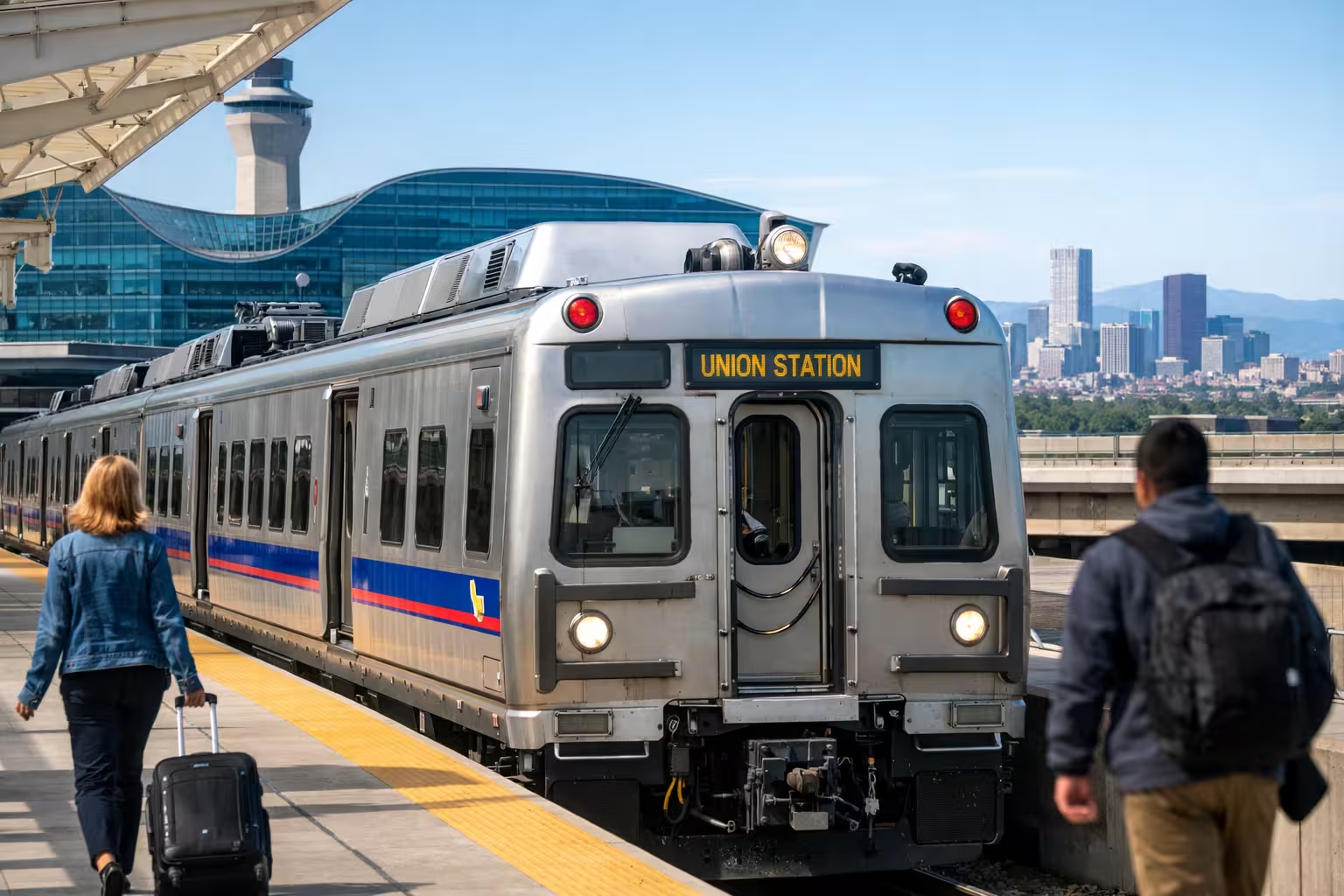
The denver airport train is RTD’s A Line, which connects Denver International Airport and Union Station in about 37 minutes using a current airport-valid fare of $10 for most adult riders.
If you land at Denver International Airport and need the fastest simple route into downtown, the answer is usually the denver airport train. The public rail link is RTD’s A Line, and it connects the airport with Denver Union Station in about 37 minutes across a 23-mile route. That is why this keyword keeps pulling traffic. People do not want theory. They want one clean answer that tells them whether the train is worth using, how much it costs, and how to board without wasting time.
The problem is that many pages ranking for this query are either too thin or slightly outdated. They tell you the ride exists, then stop. That is not enough. You need the current fare structure, the real payment options, the station flow inside the airport, the stop pattern, and the situations where rail is not your best choice. This guide is built to cover that full decision, not just the headline facts.
Quick Facts About the Denver Airport Train
Before you read the full guide, here are the basics most travelers want first.
|
Item |
Details |
|---|---|
|
Official line name |
RTD University of Colorado A Line |
|
Route |
Denver Airport Station to Denver Union Station |
|
Travel time |
About 37 minutes |
|
Distance |
About 23 miles |
|
Stations |
8 total |
|
Airport fare |
$10 Airport Day Pass |
|
Standard non-airport day pass |
$5.50 |
|
Youth fare |
19 and under ride free |
|
Payment options |
Ticket machines, mobile tickets, MyRide, Tap-n-Ride |
|
Airport boarding point |
DEN Transit Center, south end of Jeppesen Terminal |
What the Denver Airport Train Actually Is
The denver airport train is not a separate airport-only shuttle. It is part of the Regional Transportation District, better known as RTD, and the route is officially called the A Line. RTD’s facts page says the line runs between Denver Union Station and Denver International Airport, takes about 37 minutes, and serves eight stations in total. Those facts sound simple, but they matter because most searchers are really trying to answer one question. Can this train get me from the airport to downtown without turning the trip into a headache. In most cases, yes.
That simplicity is also what makes the route so strong in search. It is direct, it is built into the airport transit center, and it serves a real traveler need. You do not have to decode a huge network map to use it. The line moves between a major airport and the city’s main downtown rail hub, which makes it easy for visitors, conference travelers, and even local residents catching flights. That direct purpose is a big reason the route remains one of the most visible transit topics in the Denver travel space.
Train vs other airport transfer options
|
Option |
Best for |
Main advantage |
Main downside |
Verdict |
|---|---|---|---|---|
|
A Line train |
Solo travelers, couples, downtown stays |
Predictable timing, fixed cost, direct to Union Station |
Not ideal for far suburbs or heavy-luggage groups |
Best default for downtown trips |
|
Uber / Lyft |
Door-to-door suburban trips |
Direct drop-off |
Price varies, traffic risk |
Better for non-transit-friendly destinations |
|
Taxi |
Travelers wanting simple curb pickup |
No app needed |
Usually higher cost than train |
Fine, but rarely best value |
|
Shared shuttle |
Some hotel or group trips |
Can fit special routes |
Slower, more waiting |
Useful only in specific cases |
|
Multi-stop trips, mountain travel |
Full flexibility |
Parking, cost, airport pickup hassle |
Better for mountain or suburban-heavy trips |
Is the Denver Airport Train the Same as the Airport Concourse Train
No, and this is one of the biggest sources of confusion for first-time travelers. DEN has an internal underground train that moves passengers between Jeppesen Terminal and the airport’s A, B, and C concourses. That train is part of the airport itself. The A Line is different. It is the citybound commuter rail route that takes you between the airport and Union Station downtown. If you do not explain this clearly, readers get lost fast.
The order of movement matters. After your flight lands, you use the airport’s internal system to reach the terminal and baggage claim area. Only after that do you follow signs to the Transit Center or Trains to City area for the A Line. Many weak travel pages blur these systems together and assume users already understand the airport layout. That is careless. A good guide removes confusion before it starts.
How Long the Denver Airport Train Takes
The most important number for this topic is still the same. RTD says the A Line trip between Union Station and the airport takes about 37 minutes. DEN repeats that same estimate in its transportation information. That consistency is useful because travel readers do not trust content that feels vague. If different pages start throwing around different numbers, the whole article looks weak. For this route, the strongest published baseline is still right around that 37-minute mark.
That said, smart travelers do not pretend the full trip ends at 37 minutes. You still need time to get off the plane, ride the airport’s internal train if needed, collect bags, walk to the transit center, and wait for the next departure. The rail segment is fast, but the real door-to-door total is always longer. The best content says that plainly instead of overselling the route as if the moment your plane touches down you are magically in downtown Denver.
Denver Airport Train Fare in 2026
This is where many ranking pages get sloppy. RTD’s current fare pages frame airport travel around the Airport Day Pass, which costs $10 and is valid across the RTD system, including airport service. RTD also lists a standard Day Pass at $5.50, but that is not valid for airport trips. In plain English, if you are riding to or from DEN on the A Line, the normal product to look for is the $10 Airport Day Pass. That is the cleanest and most current way to explain the fare.
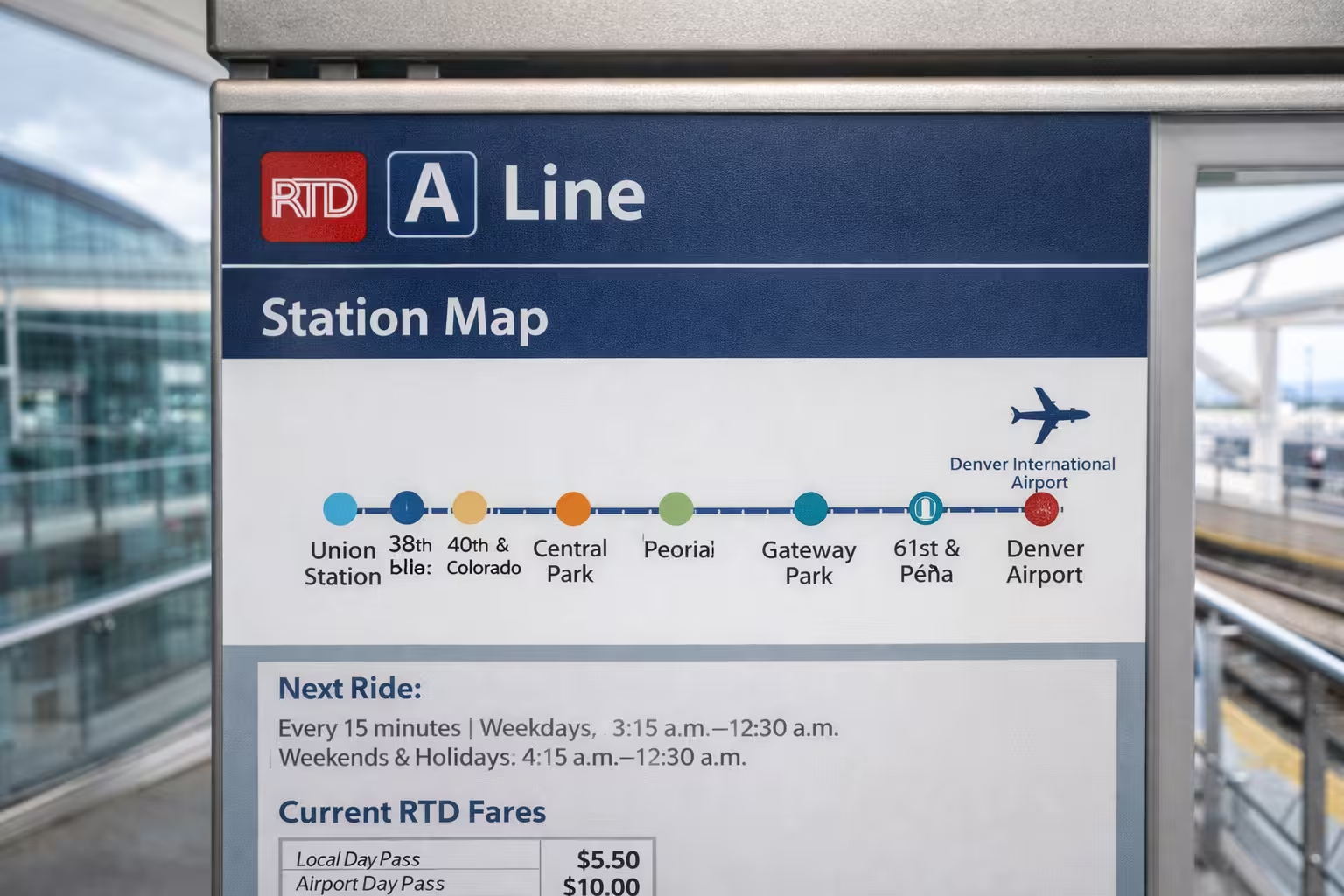
This matters because some tourism pages still describe the trip as $10 each way. That language is not as precise as RTD’s current fare structure. If your article repeats older wording without checking RTD, you look lazy. Readers do not care whether the mistake came from an old travel guide or a copied competitor paragraph. They only see that your information feels off. A modern article should explain the airport fare as RTD explains it now, not how someone summarized it years ago.
Table: Fare and payment options
|
Payment method |
How it works |
Best for |
Important note |
|---|---|---|---|
|
Ticket vending machine |
Buy at the station before boarding |
First-time riders who want a printed ticket |
Slower than tapping |
|
Mobile ticket |
Buy on your phone |
Travelers who like app-based tickets |
Make sure it is activated correctly |
|
MyRide |
RTD payment account/card system |
Frequent or repeat RTD riders |
Better for locals or repeat users |
|
Tap-n-Ride |
Tap contactless Visa or Mastercard or supported wallet on validator |
Fastest option for many visitors |
Use the same card/device for fare capping |
|
Airport Day Pass |
Covers airport travel across the RTD system for the day |
Most airport riders |
Current standard airport-valid fare product |
How to Pay for the Denver Airport Train
RTD now gives riders more than one way to pay, and that is another spot where weak guides fall behind. You can still buy tickets from station machines. You can also use mobile ticketing and the MyRide system. On top of that, RTD now offers Tap-n-Ride, which lets you tap a contactless Visa or Mastercard, or a supported mobile wallet, directly on the validator. RTD says fare capping applies when you keep using the same card or device, so you do not pay more than the relevant pass ceiling.
For airport travelers, this matters because speed matters. Nobody wants to stand in front of a machine after a flight, especially with bags and a line forming behind them. Tap-n-Ride is a real user upgrade because there is no reload step and no pre-purchased ticket requirement. RTD also notes that each rider needs a separate card or device if traveling together, which is exactly the type of practical detail most generic guides leave out. That omission is why so many travel articles feel polished but not useful.
Validator Rules Most Travelers Miss
There is another detail many articles skip because they either do not know it or do not bother explaining it. RTD’s rail how-to page says smart card users need to tap before boarding on the platform reader. It also says riders should verify the default service level and select the correct one if needed. That matters for airport service because getting the fare wrong creates hassle you could have avoided with a better explanation.
The same RTD guidance also notes that some paper products need validation at the rail station, and overhead signs identify the correct train direction. That may sound obvious to locals, but first-time users search this keyword because they are not locals. They need the boarding process broken down clearly. A guide that explains both price and platform behavior is stronger than one that only repeats the route map.
Table: Exact boarding flow at DEN
|
Step |
What to do |
|---|---|
|
1 |
Arrive in Jeppesen Terminal after clearing the airport-side arrival flow |
|
2 |
Follow signs to the Transit Center |
|
3 |
Go to the south end of Jeppesen Terminal |
|
4 |
Exit through the glass doors |
|
5 |
Take the escalator or elevator down to ground level |
|
6 |
Buy fare or tap at the validator |
|
7 |
Board the A Line toward Union Station |
Where to Catch the Denver Airport Train at DEN
At the airport, the A Line uses the DEN Transit Center. DEN’s official transportation page says the transit center is accessed from the south end of Jeppesen Terminal by exiting through the glass doors and taking the escalator or elevator down to ground level. That is the clearest official boarding direction available, and it is the wording your article should mirror because it matches the real passenger path.
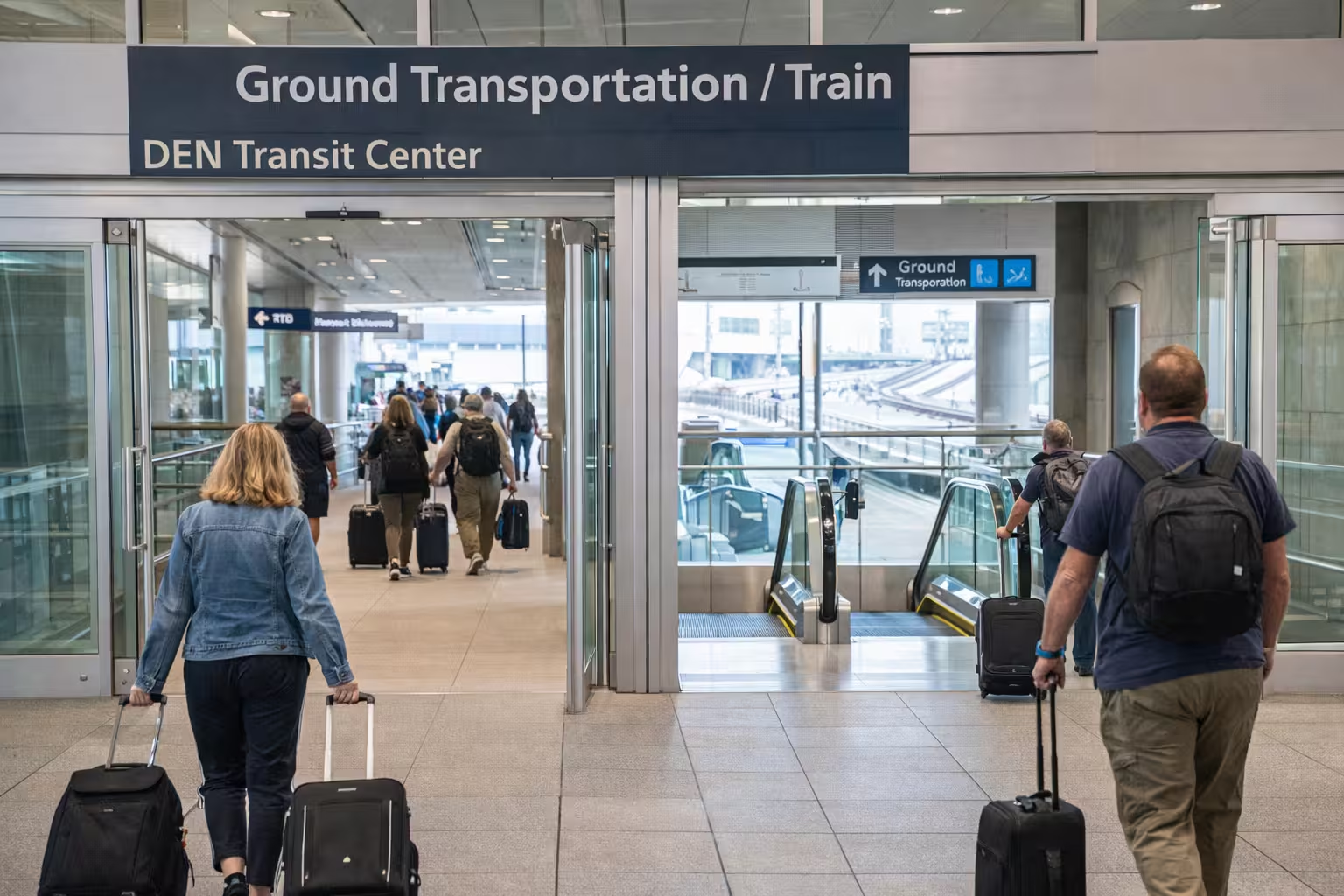
DEN also states that the station serves not only the A Line but several bus routes, which is why the signage often points people to the broader transit center instead of using only “airport rail” language. That detail is useful because travelers sometimes expect giant “train to downtown” signage and then hesitate when they mainly see Transit Center signs. A good article closes that mental gap before the trip happens.
If a traveler still feels lost, DEN says there is an RTD information booth at the transit center, open Monday through Friday from 8 a.m. to 4:30 p.m. DEN also lists RTD Customer Care hours and notes translation support in more than 200 languages. That kind of support detail is not glamorous, but it adds trust and practical value. Most thin content ignores it because it is not flashy enough. That is exactly why including it makes your page better.
Table: A Line stops and why they matter
|
Station |
Why it matters |
|---|---|
|
Denver Airport Station |
Airport endpoint for arriving and departing air travelers |
|
61st & Peña |
Useful for airport-area access and outer transfer logic |
|
40th Ave & Airport Blvd–Gateway Park |
Better for some Aurora-side access |
|
Peoria |
Useful transfer point for broader metro movement |
|
Central Park |
Good for east Denver access |
|
40th & Colorado |
Useful for neighborhoods east of central Denver |
|
38th & Blake |
Strong for RiNo access |
|
Union Station |
Main downtown destination and transit hub |
Where to Catch It From Downtown
From downtown Denver, the train uses Union Station. RTD’s current schedule shows the A Line departing from Union Station T1, and the official rail how-to page says riders should follow overhead signs next to the tracks to confirm direction and destination. That is better than vague phrases like “head to the train platform and look around.” Travelers want certainty, not guesswork.
Union Station is more than just a platform. It functions as a major downtown transit hub, which is part of what makes the A Line so useful. Once you reach Union Station, you are already in the center of a wider connection network for local and regional movement. That makes the train especially strong for visitors staying downtown, attending events in central Denver, or continuing onward without renting a car immediately.
Stops on the Route and Why They Matter
RTD lists eight stations on the A Line, including both endpoints. The full stop sequence is Denver Union Station, 38th & Blake, 40th & Colorado, Central Park, Peoria, 40th Ave & Airport Blvd-Gateway Park, 61st & Peña, and Airport Station. A lot of pages dump those names and move on. That is weak writing because readers often want to know whether one of those stops might actually fit their trip better than Union Station.
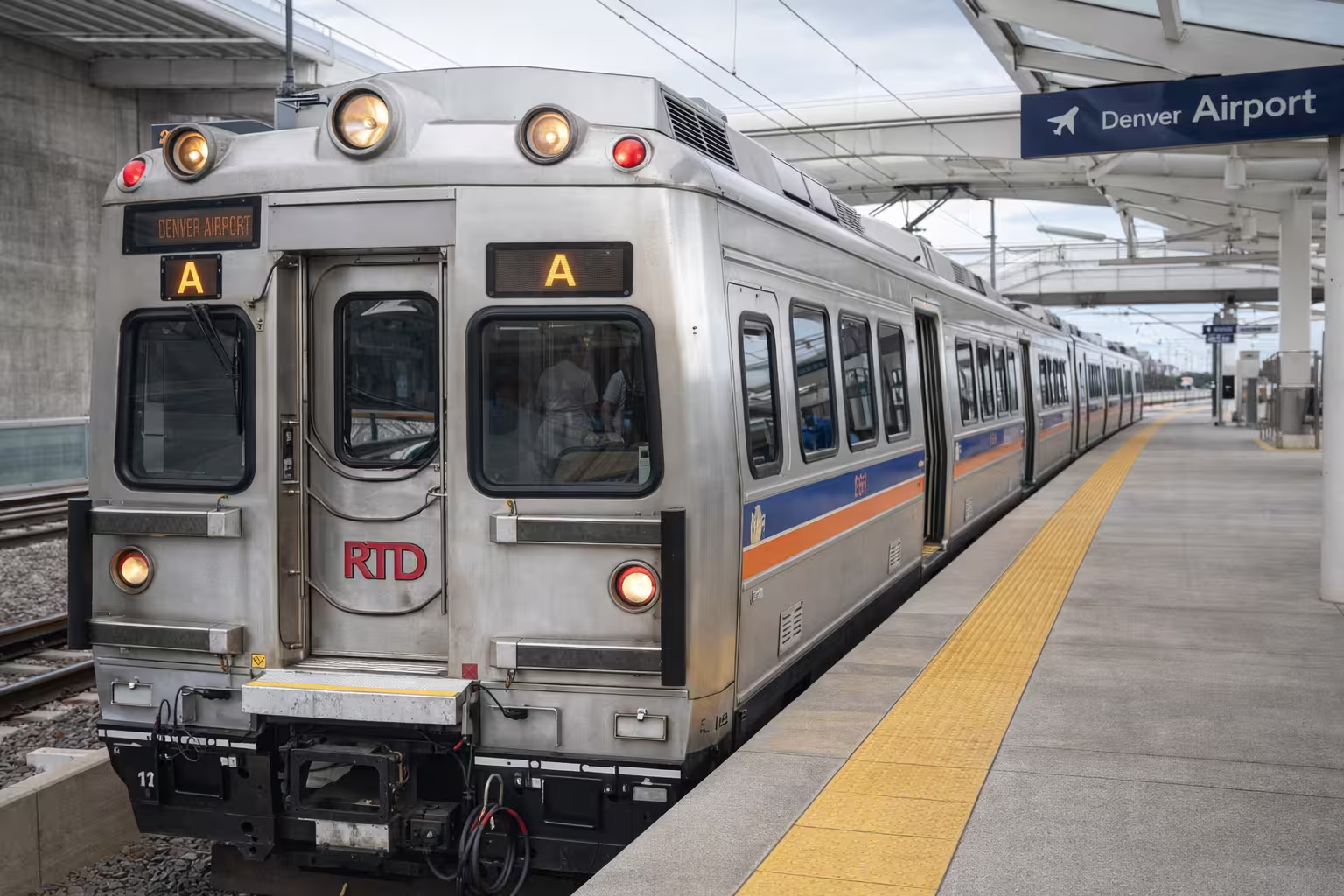
In practical terms, Union Station is the obvious downtown stop, 38th & Blake can be useful for the RiNo side of town, and the eastern stations matter more for airport-area access or specific local transfers.
Schedule and Frequency
RTD’s current A Line schedule for the January 4, 2026 to May 23, 2026 service period shows very early departures and a mix of 15-minute and 30-minute spacing depending on time of day. The weekday eastbound schedule shows service from Union Station starting as early as 3:00 a.m., with many quarter-hour departures during busier stretches. That is more useful than generic claims like “trains run frequently,” which tell readers almost nothing.
DEN’s own transportation page also summarizes the broader operating pattern as roughly 3:30 a.m. to midnight, with the last airport bus departures later into the night and peak public transit frequency around every 15 minutes. The right way to write this section is to give readers the operating pattern and then tell them to check RTD’s live schedule before travel. Static blog content should never pretend it can replace the transit operator’s real-time tools.
What the Ride Is Like With Luggage
This is one of the strongest reasons to choose the train. RTD says the airport commuter rail trains are designed for travelers with luggage, offer level boarding, and include overhead compartments and designated luggage towers. That is not just marketing language. It directly addresses one of the biggest worries travelers have about public transit after a flight. Will I be dragging bags onto a system built only for daily commuters. In this case, no. The equipment was designed with airport travel in mind.
There is still one limit you should state clearly. RTD says train operators cannot help with loading or unloading, so riders need to be able to manage their own bags. That is an important reality check. A strong article should say the service is luggage-friendly, but not pretend it works equally well for every traveler carrying oversized gear, too many suitcases, or several small children plus bags. Honest detail is more valuable than broad claims.
Accessibility and Ease of Use
Accessibility is another strength of the route. DEN says all buses and trains are wheelchair accessible, and RTD describes the airport rail equipment as offering level boarding. Those are not minor details. For many travelers, especially older passengers or people with mobility concerns, the difference between level boarding and a clumsy boarding setup can decide whether public transit feels manageable at all.
Ease of use also depends on layout, and DEN’s setup helps here. The route is tied directly into the airport’s transit center rather than being hidden at a distant off-site lot. Once you understand that the train is reached from the south end of Jeppesen Terminal, the path becomes straightforward. That kind of layout clarity makes the train more viable for visitors who would normally default to a rideshare out of fear of getting lost.
When the Denver Airport Train Is the Best Option
The train is the smartest option when your destination is downtown Denver, the Union Station area, or somewhere easily reached from the RTD network. It is also a strong choice when you want predictable timing and a fixed transit cost instead of gambling on road traffic or rideshare pricing. Because the airport fare product works as a systemwide pass for the day, the value improves if you plan to keep using RTD after you reach the city.
It also makes sense for solo travelers and couples who pack reasonably and want a low-friction trip into central Denver. For these users, the A Line strips the airport transfer down to something simple. Get to the transit center, pay once, board, and roll into downtown. That is exactly the kind of straightforward travel experience people hope public transit will deliver, and on this route it usually does.
Table: When the train is the right choice
|
Situation |
Take the train? |
Why |
|---|---|---|
|
Staying near Union Station |
Yes |
Direct and simple |
|
Staying in central downtown Denver |
Usually yes |
Strong transit access from Union Station |
|
Traveling solo with normal luggage |
Yes |
Best mix of simplicity and cost |
|
Family with many bags and strollers |
Maybe not |
A direct vehicle may be easier |
|
Landing very late at night |
Maybe not |
Frequency drops and service is not all-night |
|
Going straight to a mountain resort |
No |
You likely need a different ground transport option |
|
Going to a far suburb with no transit connection |
Usually no |
Door-to-door service is more practical |
When the Denver Airport Train Is Not the Best Option
This is where weak articles usually lie by omission. The train is not always the best choice. If you land very late, are staying far from the A Line corridor, are headed directly to the mountains, or are traveling with more luggage than you can manage, rail may not be ideal. DEN lists multiple other ground options, including ride share, shared shuttles, taxis, rental cars, and mountain carriers. A good guide should admit that because users are trying to solve the whole trip, not just the rail segment.
Group travel changes the equation too. A solo traveler may save money and time on the train, while a group headed to one suburban hotel near denver airport may be better off splitting a vehicle. That is not anti-train. It is reality. Content that pretends every reader should take the A Line is not useful. Google has seen enough thin recommendation pages already. Balanced advice is part of what makes a page feel trustworthy.
Practical Tips to Make the Trip Smoother
The smartest move is to treat the rail ride as one part of the airport journey, not the whole journey. If you are leaving downtown for a flight, build in station access time, waiting time, and airport security time on top of the rail segment. If you are arriving at DEN, remember that the clock does not start when the plane lands. It starts when you are actually ready to leave the terminal area for the transit center. That sounds obvious, but many travelers underestimate it.
Use the easiest payment method before you get stressed. If you have a supported contactless card or wallet, Tap-n-Ride is usually the fastest path. If you prefer traditional tickets, buy and validate correctly. If you are not sure which fare level applies, check the platform instructions before boarding. Those steps are simple, but simple mistakes waste more time than the actual train ride.
Frequently Asked Questions
Conclusion
The denver airport train works because it solves a common travel problem with very little drama. RTD’s A Line gives travelers a direct, airport-linked rail connection between DEN and Union Station in about 37 minutes, with a current airport-valid fare centered on the $10 Airport Day Pass. It is easy to understand, reasonably easy to board, and strong enough for both visitors and locals when the destination lines up with the corridor.
If you want this keyword to rank, the winning approach is not stuffing the phrase into every second heading. It is covering the real traveler decision better than weaker pages do. That means explaining the fare correctly, clarifying the airport boarding path, separating the A Line from the concourse train, and telling readers when the train is the wrong option. Do that well and your content stands a real chance against the softer guide pages cluttering page one.