
How Big is Denver Airport? Size of Denver International Airport and Its Comparision
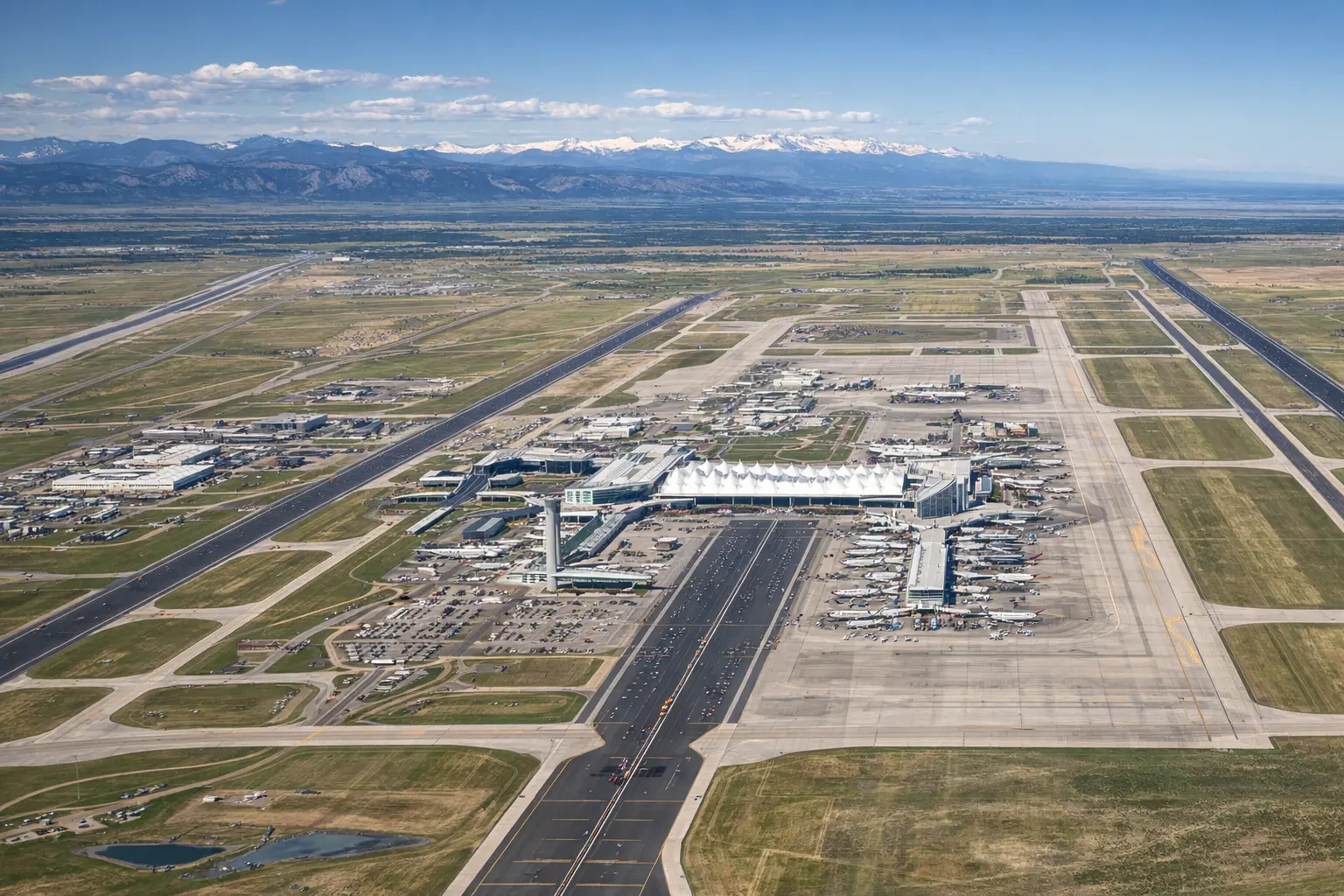
Denver International Airport (DEN) is an iconic landmark not only for Denver but also for the entire United States. Whether you’re a frequent flyer or a curious traveler, you’ve probably asked yourself: How big is Denver Airport? If you’ve ever seen the sprawling grounds of this airport, you may have an idea, but you might be surprised at just how massive it truly is.
In this article, we’ll explore the size of Denver Airport from several angles, comparing it to other major airports, and breaking down its true scale. Additionally, we’ll look at its history, design, and some fun facts that make Denver International Airport stand out among its peers. Let’s dive into the numbers and understand the immense scale of this hub.
For convenient parking options at Denver International Airport (DEN), visitors can explore a variety of parking services, including economy, short-term, and long-term parking lots. Whether you’re picking someone up or leaving your car for an extended trip, DIA parking offers ample space and easy access to terminals.
Denver Airport Size: Breaking It Down
When it comes to size, Denver International Airport (DEN) doesn’t just compete — it dominates. But exactly how big is Denver Airport? To put it in perspective:
- Total Area: Denver International Airport covers a staggering 33,531 acres (13,570 hectares).
- Runway Length: It features six runways, the longest of which is 16,000 feet (4,877 meters), making it one of the longest runways in the United States.
- Passenger Traffic: DEN serves over 69 million passengers annually, making it one of the busiest airports in the world.
This expansive area is roughly two times the size of Manhattan (which spans about 14,000 acres). With such vast space, it’s not just an airport; it’s an entire ecosystem designed to handle millions of travelers.
How Big is Denver Airport Compared to Others in the USA?
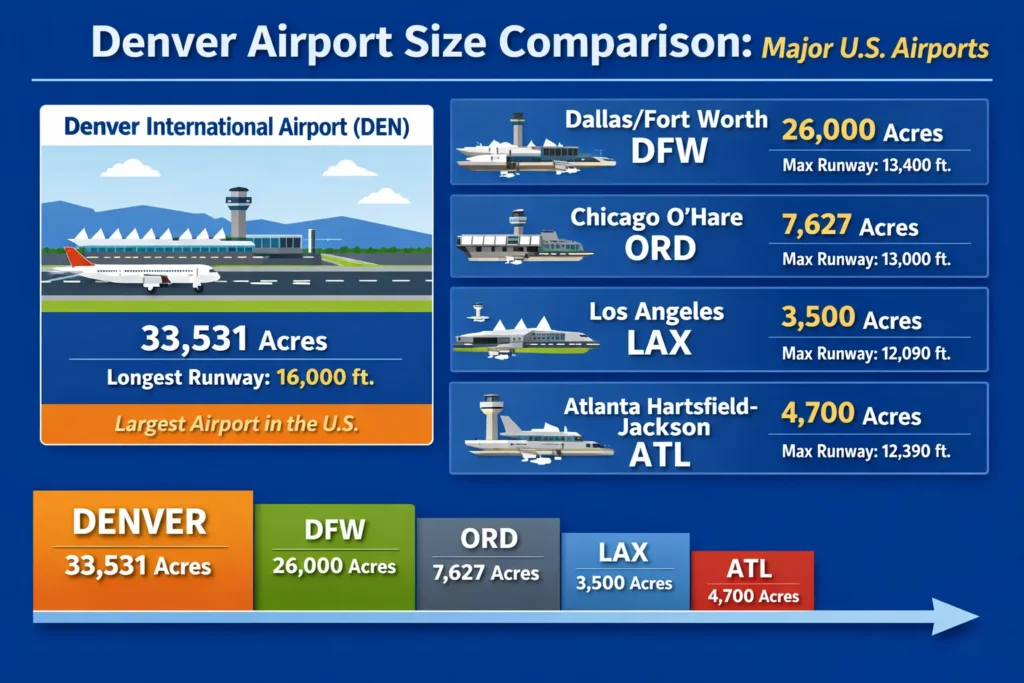
When it comes to the size of Denver Airport, it stands out as one of the largest airports in the United States. However, the vast size of Denver International Airport (DEN) is not just a point of pride; it’s also essential for handling the massive amount of passengers and cargo that pass through its gates each year. In this section, we’ll compare Denver International Airport to other major airports across the USA and see how it stacks up in terms of size.
Denver International Airport Size Overview
Before we jump into the comparisons, let’s first take a closer look at the size of Denver International Airport:
- Land Area: 33,531 acres (13,570 hectares), making it the largest airport in the United States by land area.
- Runways: 6 runways, with the longest being 16,000 feet (4,877 meters).
- Annual Passengers: Over 69 million passengers.
- Location: Situated about 25 miles (40 km) from downtown Denver, Colorado.
In comparison to many other airports in the country, Denver’s size is not just impressive but offers significant advantages when it comes to future expansion and long-term growth. Let’s take a look at other major airports in the USA and how they compare.
Dallas/Fort Worth International Airport (DFW)
- Land Area: 26,000 acres (10,526 hectares)
- Annual Passengers: 69 million passengers (approximately the same as DEN)
- Runways: 7 runways, with a length of up to 13,400 feet (4,084 meters)
- Location: Situated between the cities of Dallas and Fort Worth, Texas, DFW is often considered one of the busiest airports in the United States and the world.
Comparison to Denver
While DFW is slightly smaller than Denver International Airport in terms of total land area, it has more runways and is a major hub for international travel, especially to destinations in Europe, South America, and Asia. While DEN’s runway is slightly longer than most of DFW’s, Dallas/Fort Worth continues to compete closely with Denver in both passenger numbers and cargo volume.
Orlando International Airport (MCO)
- Land Area: 13,000 acres (5,261 hectares)
- Annual Passengers: Around 50 million passengers (fewer than DEN and DFW)
- Runways: 4 runways, with a length of up to 12,000 feet (3,657 meters)
- Location: Situated about 6 miles (10 km) south of downtown Orlando, Florida, MCO is one of the busiest airports in the southeastern U.S.
Comparison to Denver
Orlando International Airport is considerably smaller than Denver International Airport both in terms of land area and passenger traffic. While MCO is a major hub for travelers heading to Florida’s theme parks, Denver holds the edge in terms of total land area and runway length. Additionally, Denver’s extensive land gives it more room for future growth.
Los Angeles International Airport (LAX)
- Land Area: 3,500 acres (1,416 hectares)
- Annual Passengers: 88 million passengers (one of the busiest airports in the USA and the world)
- Runways: 4 runways, with a length of up to 12,090 feet (3,683 meters)
- Location: Located approximately 18 miles (29 km) southwest of downtown Los Angeles, California, LAX is a major international gateway, particularly for flights to Asia and the Pacific.
Comparison to Denver
While LAX has a higher passenger volume than DEN, it is much smaller in terms of land area. With only 3,500 acres, LAX is dwarfed by the size of Denver International Airport. However, LAX’s proximity to the Pacific Ocean and its role as the primary airport for the Los Angeles metropolitan area gives it a significant advantage in passenger traffic. DEN may have more space, but LAX is a hub for international connections.
Chicago O’Hare International Airport (ORD)
- Land Area: 7,627 acres (3,089 hectares)
- Annual Passengers: Over 83 million passengers (second-largest in the U.S. after LAX)
- Runways: 8 runways, with a length of up to 13,000 feet (3,962 meters)
- Location: Located about 17 miles (27 km) northwest of downtown Chicago, Illinois, O’Hare is one of the busiest airports in the world and a major hub for both domestic and international flights.
Comparison to Denver
When it comes to land area, O’Hare is much smaller than Denver International Airport, covering less than one-fourth of the land area of DEN. Despite this, O’Hare’s large passenger traffic and extensive flight network make it one of the most influential airports in the United States. Denver, with its huge expanse, is better positioned for long-term expansion and development, which is vital as air traffic continues to rise.
Hartsfield-Jackson Atlanta International Airport (ATL)
- Land Area: 4,700 acres (1,902 hectares)
- Annual Passengers: Over 107 million passengers (the busiest airport in the world in terms of passenger traffic)
- Runways: 5 runways, with a length of up to 12,390 feet (3,773 meters)
- Location: Located about 10 miles (16 km) south of downtown Atlanta, Georgia, ATL serves as a major hub for Delta Airlines and domestic flights.
Comparison to Denver
Hartsfield-Jackson may have a larger passenger volume than Denver, but it is significantly smaller in terms of land area. Atlanta’s 4,700 acres is far less than Denver’s 33,531 acres. However, ATL has strategically utilized its smaller space to maximize efficiency and maintain its position as the world’s busiest airport. Denver’s vast land area provides it with the flexibility for future expansion and room for development that ATL simply doesn’t have.
Miami International Airport (MIA)
- Land Area: 3,230 acres (1,307 hectares)
- Annual Passengers: Around 45 million passengers
- Runways: 4 runways, with a length of up to 13,000 feet (3,962 meters)
- Location: Situated about 8 miles (13 km) northwest of downtown Miami, Florida, MIA is a major gateway for flights to Latin America and the Caribbean.
Comparison to Denver
While MIA handles a significant amount of international traffic, especially to Central and South America, its size is far smaller than Denver International Airport. MIA’s 3,230 acres are a fraction of DEN’s 33,531 acres. However, MIA has an advantage in its international connections and airline partnerships, particularly with airlines serving Latin America.
Denver International Airport Size Comparison: A Global Perspective
To truly understand how big Denver Airport is, we can compare it with other major airports around the world.
1. King Fahd International Airport, Saudi Arabia
King Fahd International Airport is the largest airport in the world by total area, covering approximately 78,000 acres. While it’s larger than Denver in terms of landmass, Denver International Airport still ranks among the largest airports globally.
2. Dallas/Fort Worth International Airport (DFW), USA
In the United States, Dallas/Fort Worth International Airport holds the title of the second-largest airport by land area, covering 26,000 acres. While Denver beats DFW by about 7,500 acres, both airports are giants in their own right.
3. Beijing Capital International Airport, China
Beijing Capital, one of the busiest airports globally, has a land area of about 23,000 acres. While it falls short of Denver’s land size, it leads in passenger traffic, highlighting how space can vary in importance depending on the purpose.
4. Los Angeles International Airport (LAX)
LAX, which is among the busiest airports in the world in terms of passenger traffic, spans 3,500 acres, making it smaller than Denver by a significant margin. Despite its smaller size, it plays a huge role in international travel, especially for flights to and from Asia and Europe.
From this Denver airport size comparison, it’s clear that Denver International Airport has a competitive advantage in terms of space, allowing for future growth and expansion, while still competing globally in terms of passenger traffic.
Why is Denver Airport So Big?
Design and Layout
The sheer size of Denver International Airport (DEN) is part of its design, which was purposefully constructed to accommodate future growth and handle increasing air traffic. When the airport opened in 1995, its massive land area was meant to ensure flexibility as the city and global air travel grew.
One significant aspect of the design is its spacious runways. The length of these runways allows the airport to handle larger aircraft and support direct long-haul international flights. In fact, the size of the airport helps it handle extreme weather conditions, allowing Denver to remain operational even in snowstorms or challenging weather.
Expansion Opportunities
Another key reason behind its size is expansion potential. With millions of passengers traveling through each year, the airport’s planners ensured that it had enough room to grow. For instance, DEN is planning a massive terminal expansion project, which includes a new concourse and upgraded facilities. This expansion is expected to enhance the passenger experience and increase capacity in the coming decades.
Cargo Operations
In addition to passenger traffic, Denver International Airport handles a significant amount of cargo. Its vast land area allows for dedicated cargo facilities, which are crucial for businesses involved in international trade. This includes industries like e-commerce, medical supplies, and technology manufacturing.
The Unique Features of Denver Airport
Apart from its size, Denver International Airport (DEN) is known for several unique features that set it apart from other airports.
The Legendary Roof
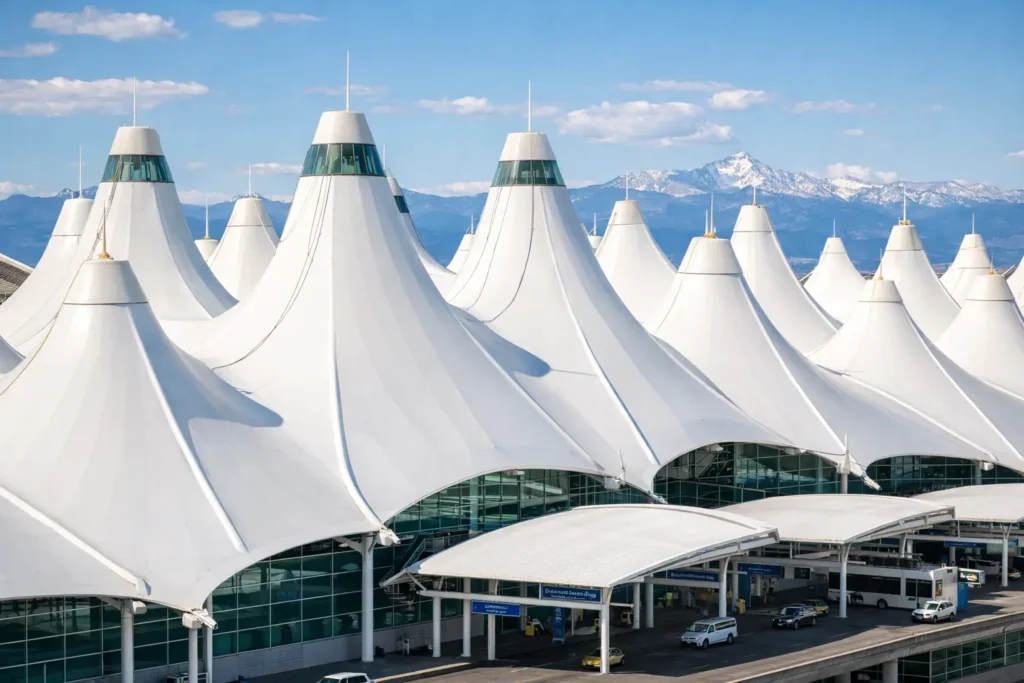
One of the most recognizable aspects of Denver Airport is its white, tent-like roof. Made of Teflon-coated fiberglass, it resembles the peaks of the Rocky Mountains and stands as a symbol of the region. The roof design also helps the airport with natural light and energy efficiency.
Art and Culture
Denver International Airport has become a cultural hub, featuring unique art pieces like the Blue Mustang sculpture — a 32-foot tall blue horse with glowing red eyes. The airport is also home to murals and sculptures that reflect Denver’s culture and history.
Mystery and Conspiracy
It’s not all just facts and figures! Denver International Airport has long been surrounded by mystery and conspiracy theories. Some people believe that the airport is connected to a secret underground base or that its design holds hidden meanings. While these theories are unproven, they certainly add to the intrigue of this massive facility.
Sustainability Efforts
Denver is also focused on sustainability, with efforts to reduce its carbon footprint. The airport has implemented several eco-friendly initiatives, including using renewable energy sources and promoting water conservation efforts. In fact, it’s one of the few airports with a significant solar energy farm on its grounds.
Key Facts About Denver Airport
The Future of Denver International Airport
Given its size and ongoing expansion, the future of Denver International Airport looks incredibly promising. As Denver continues to grow both economically and culturally, the airport will play an even more vital role. With major renovation and expansion projects planned for the next decade, we can expect to see increased flight options, enhanced passenger experiences, and even more eco-friendly initiatives.
Plans for Growth
One of the most significant developments in the coming years is the Great Hall Project, a complete overhaul of the airport’s main terminal, which aims to streamline passenger check-in and security point. Along with a new concourse and upgraded amenities, the project will further cement Denver as a global travel hub.
Conclusion
So, how big is Denver International Airport? The answer is huge — in terms of land, passengers, and influence. With its 33,531 acres of land, six massive runways, and the ability to expand further, DEN is undeniably one of the most important and largest airports in the world.
By comparison, Denver Airport size is unparalleled when it comes to space, and it is designed to grow with the future. Whether you’re marveling at its sprawling infrastructure or wondering what’s next for this giant, one thing is clear — Denver International Airport is here to stay and continue impressing travelers for decades to come.
Though airports like LAX, ORD, and ATL may lead in passenger traffic, Denver’s international airport size makes it an important player, with an eye on the future of aviation in the U.S. Denver’s vast space also allows for sustainability initiatives and the creation of unique airport experiences that set it apart from other U.S. airports.
So next time you’re flying through DEN, take a moment to appreciate just how big and influential this airport really is. After all, it’s not just about getting from point A to point B — it’s about experiencing the scale of an airport that could very well be the hub of tomorrow’s air travel.