The Ultimate Guide to Denver Airport Murals 2026
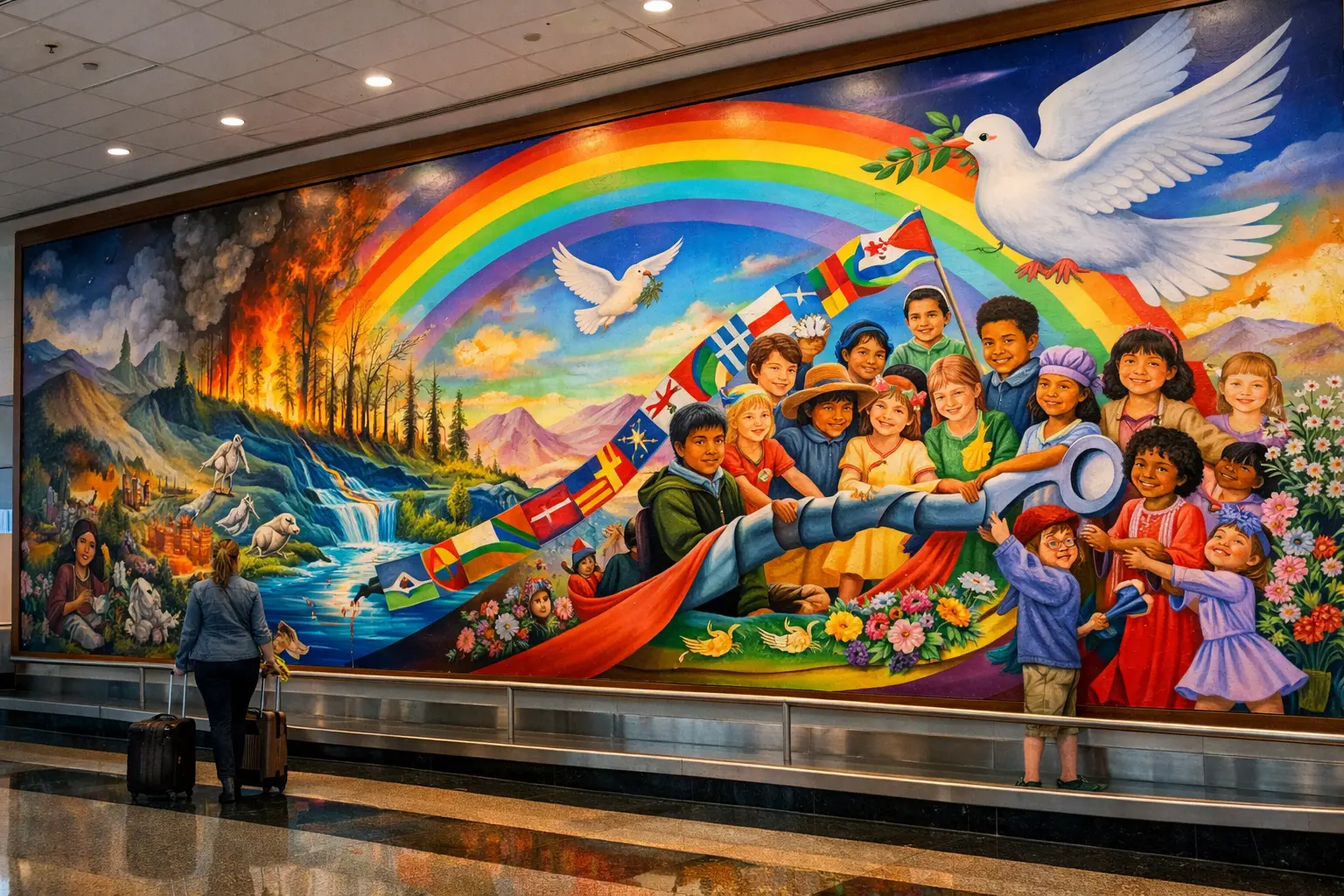
Denver airport murals are more than just vibrant pieces of art scattered across one of the busiest airports in the United States. These murals tell captivating stories, provoke thought, and offer a unique blend of history, culture, and social commentary. As travelers pass through Denver International Airport, they’re greeted by murals that symbolize hope, peace, and the rich heritage of Colorado, making them an essential part of the airport’s public art program. In this article, we’ll explore the significance of these murals, their locations, and why they have captured the imagination of millions.
Summary
- A complete introduction to the Denver Airport murals, including their history and where they are located within the airport.
- Meaning and interpretation of the most famous murals and what they represent about peace, environment, and community.
- How the art program at Denver International Airport came to be and why it’s one of the most interesting airport art collections in the world.
- Practical guide for travelers—how to see the murals during your visit or layover.
- Insight into why these murals sparked controversy and conspiracy theories and what the artists actually intended to say.
- Recommendations for photography, accessibility, and combining your visit with other DIA art installations.
Introduction
When you walk through Denver International Airport (DIA), the murals don’t feel like background décor; they feel like compelling stories painted in vivid colors that speak directly to every traveler. These artworks are among the most talked‑about public pieces in any U.S. airport, blending history, culture, hope, and controversy into expansive imagery that millions of visitors encounter each year. What makes them special isn’t just their scale, but the emotional reaction they provoke—from admiration to bewilderment.
Located in key passenger areas such as baggage claim and major concourses, these murals were commissioned in the early 1990s as part of a broader public art initiative at the airport. They continue to draw attention not just for their artistic beauty but for the powerful themes they portray.
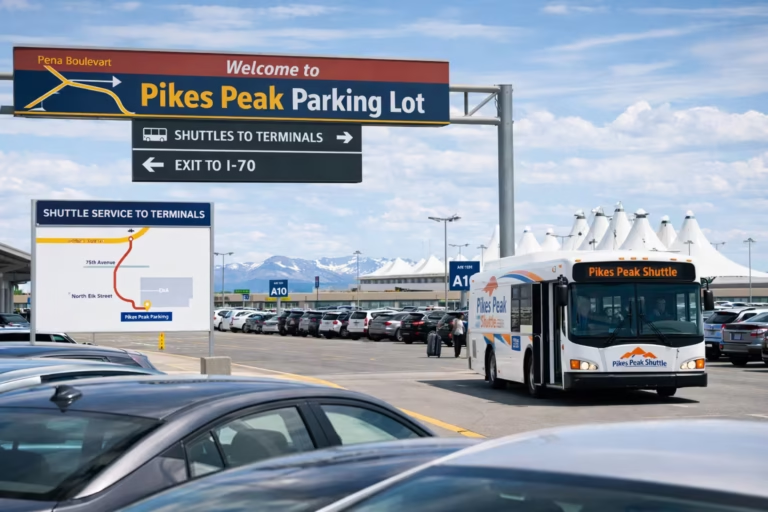
For travelers planning to explore the murals, it’s important to know the DIA parking options available for a smooth and convenient experience. Be sure to check out the DIA parking map to find the nearest parking lots and make your visit hassle-free.
The Art Program at Denver International Airport
Denver International Airport boasts an extensive public art program, supported by a mandate that dedicates part of every major capital project to art installations. This commitment has resulted in a range of artworks — from murals and sculptures to interactive pieces — that turn what might have been a routine travel experience into something deeply memorable.
Unlike typical airport art that may merely decorate spaces, DIA’s installations are meant to engage, educate, and challenge. Murals play a significant role in this program because they occupy large, visible spaces and can tell complex stories that reflect universal themes.
Where to Find the Murals Inside Denver Airport
If you’re planning to explore the murals during a visit, here’s what you need to know about locations and accessibility:
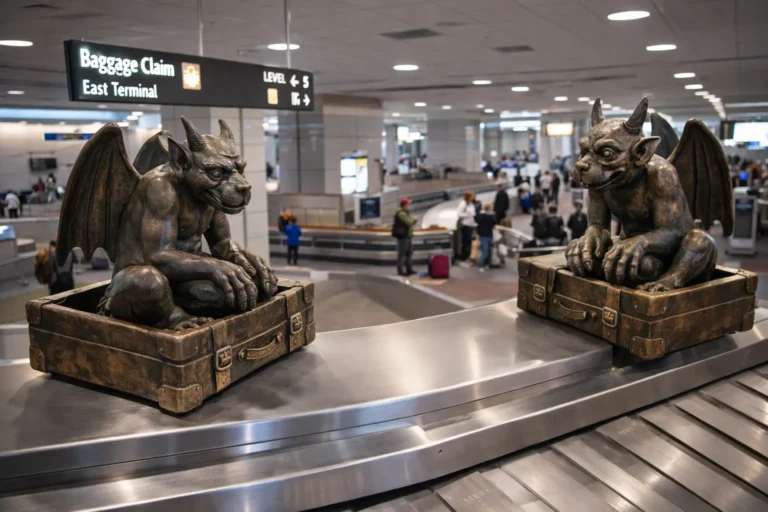
- Several murals are found near the east and west baggage claim areas, which makes them easily accessible as soon as you arrive.
- Some artworks span long walls and may require walking between concourse areas; plan for extra time if you want to explore them thoroughly.
- Because murals occupy public spaces, they are visible without special access — perfect for layovers or quick art tours between flights.
Whether you’re arriving or departing, keeping an eye out for directional signage will guide you to the murals without having to exit the airport’s security zones.
The Most Famous Murals at Denver International Airport
Below are some of the most notable murals that travelers talk about — both for their artistic impact and the stories they tell.
1. Children of the World Dream of Peace
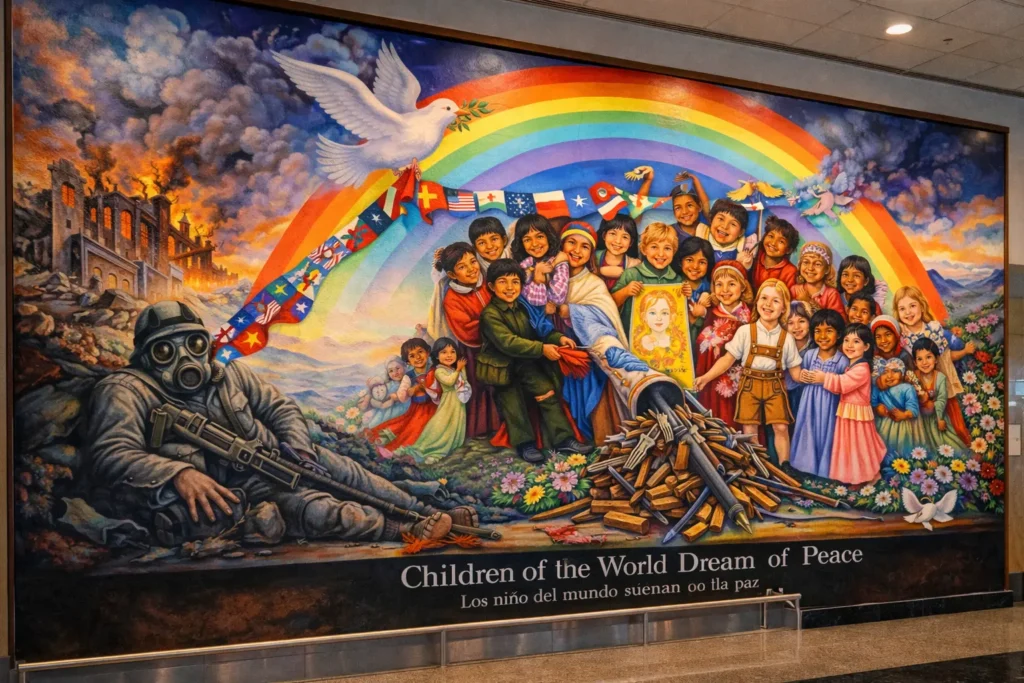
One of the most iconic murals at DIA is Children of the World Dream of Peace, painted by Leo Tanguma, a renowned Chicano artist known for large‑scale narrative murals.
This artwork is split into two distinct halves: the first portion depicts the horrors of war through stark imagery that includes a soldier in a gas mask, while the second portion transitions to scenes of smiling children from different cultures celebrating peace.
Tanguma’s intention wasn’t to shock, but to show a journey — from the despair of conflict toward a hopeful vision of unity. This contrast challenges viewers to reflect on human resilience and the possibility of global harmony.
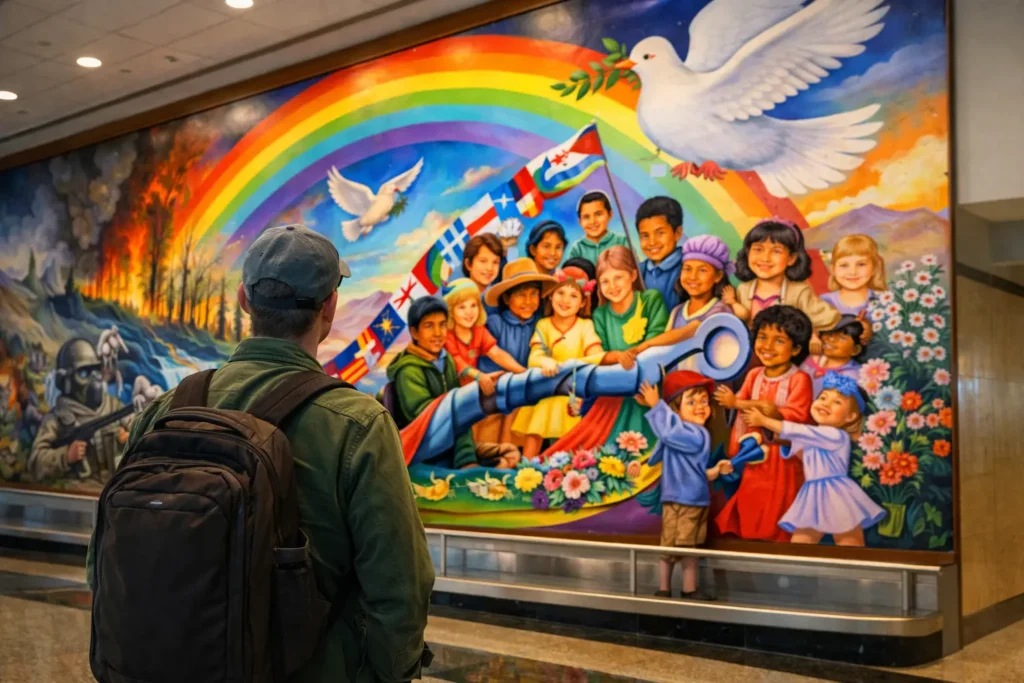
2. In Peace and Harmony with Nature
Another powerful mural by Tanguma, In Peace and Harmony with Nature, juxtaposes images of environmental destruction with scenes of ecological restoration and community cooperation.
This mural captures a moment in global conversation: the awareness that human activity can harm our planet, and at the same time, the recognition that collective efforts can help heal it.
Through expressive colors and sweeping scenes, this mural turns the airport — usually a place of motion and transition — into a space for contemplation about our relationship with the natural world.
3. Mile High and Rising — A Tribute to Local Heritage
While murals like Tanguma’s address global themes, others focus on regional history and identity. Mile High and Rising celebrates Colorado’s cultural and historical landscape, honoring contributions from African American pioneers and local storytellers.
This piece gives travelers a moment to connect with the deeper heritage of the region they are entering or leaving, beautifully integrating local narrative into the airport’s public spaces.
4. America: Why I Love Her—Nostalgic Americana
An equally beloved mural titled America: Why I Love Her embrace is a sentimental journey across American landscapes, celebrating landmarks, traditions, and collective identity.
Through its use of postcards and vintage imagery, this mural evokes the joy of travel and the emotional bond people have with road trips and exploration—fitting themes for an international gateway like DIA.
Why These Murals Spark Controversy
It’s impossible to talk about Denver Airport murals without addressing the controversy and conspiracy theories that have surrounded them for decades.
On one hand, certain imagery such as a gas‑masked soldier or scenes of devastation, has been seized upon by conspiracy enthusiasts claiming hidden meanings or sinister intentions.
On the other hand, artists like Tanguma have explicitly explained their intentions: to reflect the realities of war and environmental issues while ultimately advocating for peace, unity, and healing.
Understanding this context enriches the experience for viewers. Rather than seeing nothing more than strange symbols, you can appreciate the dialogue the art creates between emotion and hope, conflict and resolution.
Tips for Travelers
- If you’re on a layover with a few hours to spare, allocate at least 45–60 minutes for an art walk through the main murals.
- Head first to the baggage claim murals; these large pieces are the most famous and easiest to access without security hassles.
- Bring comfortable walking shoes; the murals can stretch across long concourses and terminals.
- Respect airport protocols: keep clear of restricted areas, especially near gates and baggage handling zones.
- Want photography tips? Early morning light near windows can produce great shots without crowd interference.
- For families, share the story behind the art, like the hope in Children of the World Dream of Peace.
Denver Airport Murals in the Larger Context of Public Art
DIA’s murals are part of a much larger commitment to art that includes sculptures, installations, sound pieces, and interactive exhibits. Public art programs like this are rare in airports globally and make Denver stand out as a creative gateway.
In contrast to airports that favor generic or purely decorative art, DIA invites travelers to engage with ideas — whether social, historical, or environmental — before continuing their journey.
What are the themes of the Denver airport murals?
The themes of the Denver airport murals are deeply rooted in powerful social and political messages. One of the most prominent themes is peace, particularly reflected in Leo Tanguma’s murals, which depict the destruction caused by war and the subsequent hope for healing and unity. Other murals address environmental conservation, cultural heritage, and social justice, aiming to evoke reflection and conversation on global issues. These artworks challenge viewers to think critically about the world around them, while also offering a sense of hope and resilience for the future.
What is the history of the Denver airport murals?
The history of the Denver airport murals dates back to the early 1990s when Denver International Airport was being developed. The airport’s art program, a key component of its design, was created to enrich the travel experience and provide travelers with thought-provoking and visually stunning pieces. The murals were commissioned as part of this initiative, with Leo Tanguma being one of the primary artists. His work, along with other artists’ contributions, was meant to reflect both global and local issues through large-scale, vivid paintings. Despite some controversy and conspiracy theories surrounding their symbolism, the murals have remained iconic representations of the airport’s commitment to blending art with public space.
Closing Thoughts
In conclusion, the Denver airport murals are far more than just decorative pieces—they serve as a powerful narrative woven into the fabric of Denver International Airport. Through their vivid colors and striking imagery, these murals communicate deep themes of peace, environmental awareness, and cultural unity, while also sparking meaningful discussions about global issues. From Leo Tanguma’s poignant depictions of war and peace to the celebration of Colorado’s heritage, these artworks are a testament to the transformative power of art in public spaces.
Whether you’re a first-time visitor or a frequent traveler, taking time to explore these murals offers an enriching experience that goes beyond just passing through an airport. Their lasting impact continues to captivate millions, making Denver International Airport not just a hub for air travel, but also a destination for art lovers and cultural enthusiasts. For anyone passing through, the Denver airport murals are an essential part of the journey—reminding us all that art has the power to inspire, challenge, and connect us all.